EIFS Repair Contractors in Indianapolis, IN
EIFS Repair Services in Indianapolis, Indiana
Inspection-led EIFS repair, stucco repair, sealant work, restoration, and installation for Indianapolis homes and commercial buildings.
Cracks running from window corners. Staining below a sill. Soft EIFS, failed sealant, open holes, loose finish, or an old patch that is failing again. These are some of the most common reasons Indianapolis property owners call Indiana Wall Systems.
What the wall looks like from the ground does not tell you what the repair actually requires. A hairline finish crack, a failed window joint, hidden moisture, and a poorly built installation detail can look similar from a distance. They are different problems and may require very different repairs.
Indiana Wall Systems provides EIFS repair, stucco repair, exterior-wall inspections, sealant replacement, restoration, and EIFS installation for Indianapolis homes and commercial buildings. The first step is to determine what failed and build the repair scope around the wall’s actual condition.
Indianapolis EIFS and Stucco Problems We Inspect and Repair
Most calls start with something visible. The conditions below are the ones we see most often on Indianapolis homes and commercial buildings:
- Cracks around windows, doors, corners, joints, and architectural details
- Staining below windows, trim, coping, or roof-to-wall intersections
- Failed or separated sealant at windows, doors, penetrations, and material transitions
- Soft, loose, or damaged sections of EIFS
- Impact damage, open holes, and woodpecker damage
- Old patches that failed or never matched the surrounding finish
- Texture or color that does not match after a previous repair
- Signs that water may be getting behind the finish
- Visible deterioration on commercial, multi-unit, and residential buildings
Not every one of these means hidden water damage. A stain can be surface dirt, or it can be the first outside sign of a wet wall. A crack can be cosmetic, or it can be a path for water. These are the symptoms that tell us what to look at, not a diagnosis on their own.
The Repair Scope Depends on What Actually Failed
Two walls can look almost identical and need very different work. Repair decisions usually fall into one of four categories, and the right one depends on what we find at the wall.
- Surface or finish damage. Limited cracking, coating problems, small impact marks, or localized cosmetic wear. The system underneath is sound, and the work stays at the surface.
- ealant or joint failure. Sealant has separated, hardened, or pulled away at windows, doors, penetrations, expansion joints, and transitions between materials. The repair removes the failed material, prepares the joint, and installs compatible sealant where the surrounding wall remains sound.
- Moisture-related repair. Water is entering through a failed detail, a flashing problem, a roof intersection, an open joint, or another vulnerable point. The repair has to address where the water is getting in, not just the stain it left behind.
- Substrate or system damage. Soft areas, delamination, deteriorated sheathing, or poorly built details where the damage extends behind the visible finish. This is the most involved category, and it is also the one most often missed when a wall is priced from the ground.
A number written before the wall is evaluated may not match the work the building actually needs. Sometimes the real repair is smaller than it looks. Sometimes it is larger. Either way, the scope should follow the condition, not a guess.
Indianapolis EIFS Repair
Our EIFS repair work starts by finding out how far the damage reaches. Soft or delaminated areas often extend past the visible spot, so we open up only what we need to and confirm where sound material begins.
From there, a typical repair can include removing damaged material, correcting failed details where it makes sense to do so, rebuilding the base coat and reinforcement mesh, and restoring the finish coat. Where failed sealant is part of the problem, we replace it so vulnerable joints around the repaired area are properly addressed. We also match the existing texture and color as closely as field conditions allow.
We will not promise an invisible repair. Aged finishes weather, fade, and pick up dirt over time, so a fresh patch can show against decades-old material no matter how carefully it is applied. What we can do is rebuild the wall correctly underneath and blend the finish as well as the existing surface allows.
Stucco Repair and Exterior Restoration
There is a difference between covering visible damage and correcting what caused it. A patch over a moving crack or a wet section of wall will fail again, often faster than the original. Good stucco repair deals with the condition first, then the appearance.

On stucco and exterior restoration work, we address cracking, loose or deteriorated material, failed patches, staining, and general surface wear. We use repair materials that are compatible with what is already on the building, because mixing incompatible products is a common reason patches crack, separate, or stand out. Texture and finish matching is part of the work, and the closeness of the match depends on the age and condition of the surrounding wall.
Call us at (765) 341-6020 or Contact us for a Free Estimate!
EIFS Inspections and Moisture-Related Concerns
An inspection makes sense any time the wall is telling you something and you cannot tell how serious it is. Common reasons to schedule an EIFS inspection include staining below windows, soft areas, cracks that keep coming back, repairs that already failed, water showing up around openings, an upcoming roof replacement, a real estate sale or purchase, and routine maintenance planning on a commercial property.
The point of an inspection is to find the failure points and define a repair scope you can stand behind. We look at sealant, transitions, penetrations, terminations, and roof-to-wall details, since that is where EIFS problems tend to start. Where the visible condition suggests it, we determine whether further moisture evaluation is warranted before any repair is priced.
Not every inspection includes the same tests. What gets checked depends on the building, its history, and what the walls are showing. We will tell you what we found and what it means in plain terms.
Sealant and Caulking Around EIFS
Sealant is one of the first parts of an EIFS wall to wear out, and failed joints are a frequent entry point for water. Sealant and caulking work covers the joints around windows and doors, penetrations, control and expansion joints, transitions between materials, signs and fixtures, and roof-related connections.
Replacing failed sealant can be an important repair on its own. It is not a fix for everything, though. New sealant does not correct damaged substrate, missing or wrong flashing, poor drainage, or wall details that were built incorrectly. When the problem is behind the finish, caulking the joint only hides it for a while.
Residential EIFS Services in Indianapolis
Many Indianapolis homeowners contact us about aging synthetic stucco and EIFS systems. Common concerns include older EIFS with questionable drainage, leaks at windows and doors, problems where the wall meets a chimney or roof, woodpecker and impact damage, additions and remodeling that have to tie into the existing finish, and prior repairs that did not hold.
If you are buying or selling, an evaluation of the residential EIFS before the deal closes can keep a small repair from becoming a negotiation problem. We can look at the wall, explain what we see, and help you decide what actually needs to be done.
Commercial EIFS Repair in Indianapolis
EIFS is used on many Indianapolis office buildings, retail properties, restaurants, multi-unit buildings, and other managed facilities. We handle commercial EIFS repair across these property types, along with institutional buildings and managed commercial portfolios.

Commercial work brings its own concerns. Visible exterior deterioration affects how a property reads to tenants and customers. Repairs near entrances and occupied spaces have to account for access, staging, and keeping the building usable while the work is underway. Damage that keeps coming back in the same locations is usually a sign of a detail that was never corrected. For property managers and facility teams, we can help plan repairs in phases and build inspection and maintenance into a regular schedule rather than waiting for the next leak.
On major EIFS and stucco projects, we schedule follow-up inspections at 30 days, 1 year, 3 years, and 10 years after completion, so the details we repaired keep performing instead of quietly failing again.
EIFS Installation for New and Existing Buildings
A successful EIFS installation depends on the parts most people never see. That includes substrate preparation, compatible air and moisture-control materials, drainage behind the system, flashing, proper terminations, reinforcement mesh, the base coat, the finish, and sealant joints that are designed to move with the building.
Indiana Wall Systems does not install EIFS directly over Tyvek. Where the approved assembly calls for it, we use a fluid-applied air and water-resistive barrier such as Senershield-VB so the wall has a continuous, properly detailed moisture-control layer. Getting these layers right at installation is what prevents the leaks and delamination that show up years later on systems that were built fast and detailed poorly. You can read more about our EIFS installation approach for new construction and existing buildings.
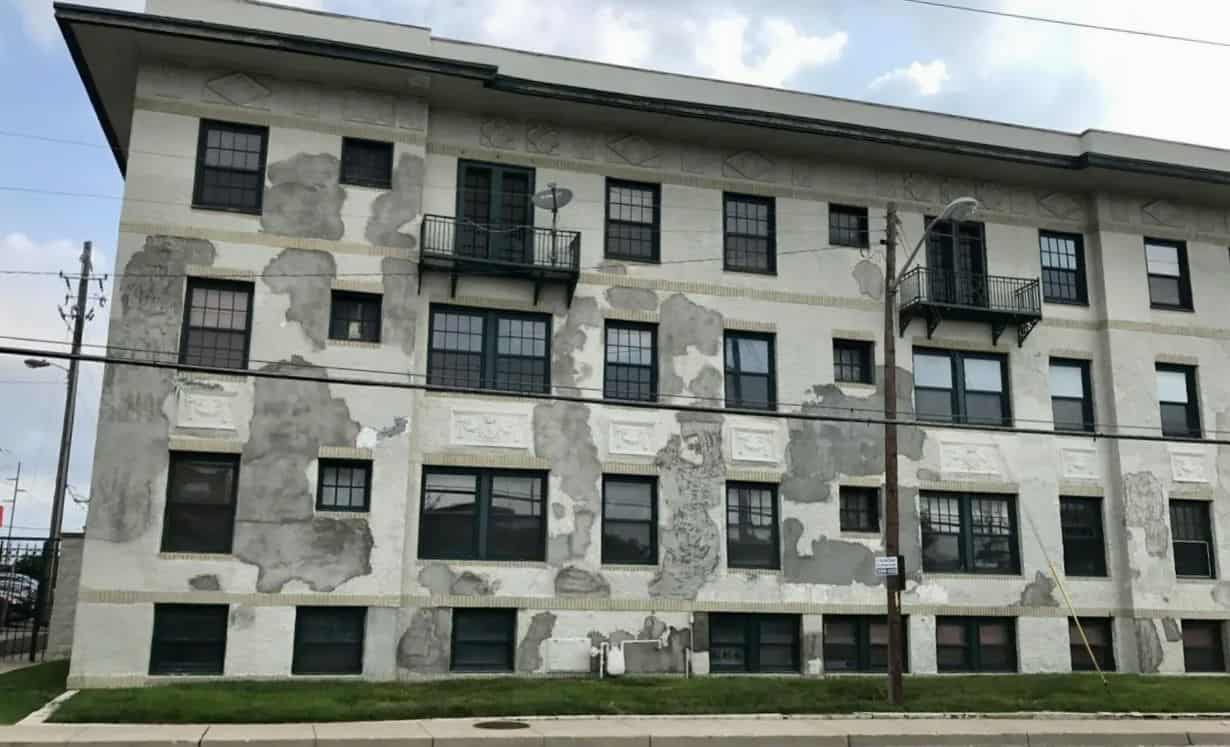
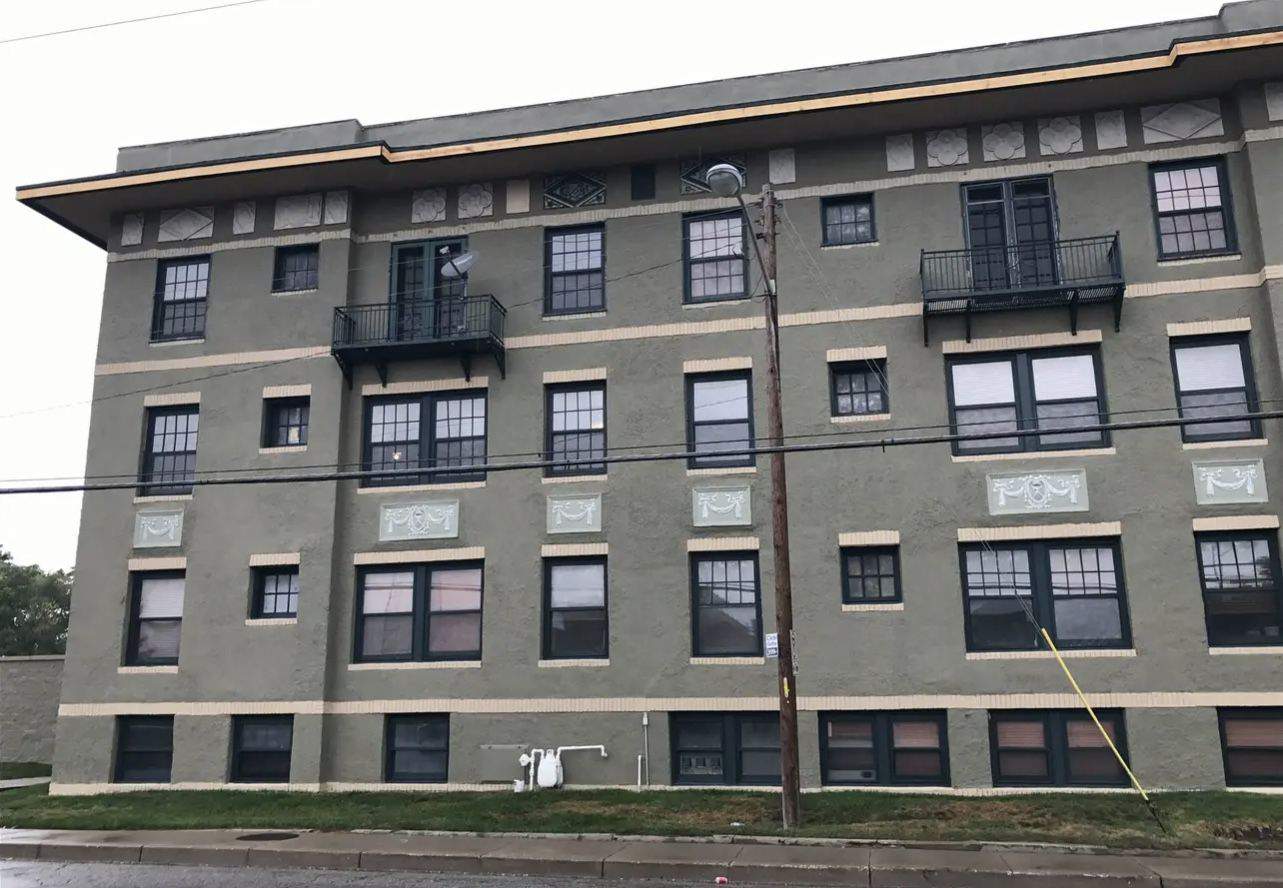
Indianapolis Project Before and After
These two photos are from an Indianapolis EIFS and stucco restoration project. The images show the exterior before and after the work.
Before: existing exterior before restoration.
After: completed exterior after restoration.
How Indiana Wall Systems Approaches an Indianapolis Project
No two buildings are identical, but most projects move through the same general steps:
- Review the visible problem and the concerns that prompted the call.
- Inspect the relevant wall details and decide whether deeper moisture evaluation is needed.
- Separate cosmetic work from sealant, moisture, and substrate repairs.
- Prepare a repair scope based on the field conditions we actually find.
- Complete the agreed work with compatible materials and proper detailing.
Why Indianapolis Property Owners Call Indiana Wall Systems
Indiana Wall Systems has been in the EIFS business for 26 years, backed by 160 years of combined field experience. The company has handled projects ranging from 300,000-square-foot commercial buildings to small residential repairs and restorations.
A few things that tend to matter to the people who hire us:
- EIFS repair, inspection, installation, sealant work, stucco repair, and restoration handled by one contractor
- Repairs built from manufacturer requirements and the field conditions on your building, not a one-size template
- Close attention to the places EIFS actually fails, including window and door perimeters, terminations, roof intersections, penetrations, and sealant joints
- Insurance carried to commercial standards, with surety bonds available where a project calls for one
- OSHA safety training and project safety awareness on every job
Request an Indianapolis EIFS or Stucco Evaluation
If you see cracking, staining, soft spots, failed sealant, or another sign that water may be entering the wall, have the condition checked before choosing a repair. The same applies if you need an inspection for a sale, a roof replacement, or maintenance planning, or you want help defining a repair scope.
Call or request a free estimate, and Indiana Wall Systems will help determine the next appropriate step.
FAQs
What are the warning signs that EIFS needs repair?
The most common signs are cracks around windows, doors, and corners, staining below sills or trim, soft or spongy areas, separated or hardened sealant joints, open holes, woodpecker or impact damage, and old patches that are failing. Any of these is worth checking. Some are cosmetic, and some point to water getting behind the finish, which is why the condition should be looked at before a repair is priced.
Can staining below a window mean water is getting behind the EIFS?
It can. Staining below a window is one of the classic outside signs of water entering at the sill, the sealant joint, or the window detail above. It does not prove hidden damage by itself, since some staining is surface dirt. But because it is a common symptom of a wet wall, it is one of the conditions worth inspecting rather than painting over and hoping.
Does every crack in EIFS mean a major repair?
No. Many cracks are limited to the finish coat and are cosmetic or minor. Others follow a moving joint or a stress point and can let water in. The crack alone does not tell you which one you have. We look at where the crack is, how it behaves, and what is around it before deciding whether it needs a surface repair or something more involved.
Can failed EIFS sealant be replaced without repairing the whole wall?
Often, yes. If the substrate and details behind the joint are sound, replacing failed sealant at windows, doors, penetrations, and transitions can be a complete repair on its own. New sealant does not fix damaged substrate, missing flashing, or poor drainage, though. If water has already been getting in, the wall behind the joint needs to be checked before the sealant is the only thing addressed.
Will an EIFS patch match the existing texture and color?
We match texture and color as closely as field conditions allow, but we do not promise an invisible repair. Existing finishes weather, fade, and collect dirt over years, so fresh material can show against the older surface even when the texture is matched well. On larger repairs or highly visible walls, recoating a full section or elevation is sometimes the better way to even out the appearance.
Does Indiana Wall Systems repair commercial EIFS buildings in Indianapolis?
Yes. We handle commercial EIFS repair on office buildings, retail centers, restaurants, multi-unit residential properties, institutional buildings, and managed commercial portfolios in the Indianapolis area. We can work around access and staging needs, plan repairs in phases for occupied properties, and help facility and property management teams set up inspection and maintenance schedules so problems are caught earlier.
How do you decide whether EIFS should be repaired or replaced?
It depends on how far the damage extends and how much of the system is still sound. Localized damage over an otherwise good wall is usually a repair. Widespread soft areas, broad delamination, deteriorated sheathing, or details that were built wrong across the building can push the decision toward larger restoration or replacement. We base the recommendation on what the inspection actually finds, not on a guess from the ground.
Can Indiana Wall Systems inspect an EIFS property before preparing a repair scope?
Yes, and that is usually the right order. An inspection lets us find the failure points, review the sealant, transitions, penetrations, terminations, and roof-to-wall details, and determine whether further moisture evaluation is warranted. That gives you a repair scope based on the wall’s real condition rather than an estimate written before anyone looked closely.