EIFS Caulking Repair Services
EIFS Caulking Repair in Indianapolis and Central Indiana
Failed caulk around windows, doors, expansion joints, and wall penetrations can leave an EIFS or stucco exterior open to moisture. Indiana Wall Systems is an EIFS caulking repair contractor serving residential and commercial properties in Indianapolis and across Central Indiana. We remove deteriorated exterior caulk, evaluate the joint and surrounding wall, and install compatible sealant as part of a condition-based repair scope.
The visible gap is only part of the concern. The joint also needs the right sealant, sound bond surfaces, and enough room to handle movement between the materials it connects.
Request a Free Caulking Repair Estimate or call 765-341-6020.
Signs That Exterior Caulking Needs Repair
Exterior sealant changes as it ages and moves through Central Indiana heat, cold, rain, UV exposure, and freeze-thaw cycles. A joint should be checked when you see:
- Caulk pulling away from EIFS, stucco, window frames, or trim
- Cracks or splits through the sealant bead
- Hardened, brittle, or crumbling material
- Open gaps at the end or edge of a joint
- Sealant that bulges, sags, or has lost its shape
- Staining below a window, door, ledge, or wall penetration
- Interior moisture that returns after a surface caulking repair
- A previously repaired joint that has separated again
These conditions can indicate adhesive failure, where sealant releases from one side of the joint, or cohesive failure, where the sealant splits within itself. They can also point to poor joint dimensions, movement beyond the sealant’s capacity, incompatible materials, or a problem in the surrounding EIFS detail.
What Is the Difference Between Caulk and Sealant?
The terms are often used interchangeably, but exterior wall contractors usually use sealant for flexible products designed to handle movement and weather exposure. Caulk is the more familiar search term and can refer to many interior and exterior products.
For EIFS caulking, the label matters less than the performance requirements. The selected material needs to work with the existing surfaces, expected expansion and contraction, joint dimensions, and EIFS manufacturer guidance. A general-purpose tube of caulk is not automatically appropriate for an exterior EIFS joint.
Where Caulking and Sealant Joints Commonly Fail
Sealant is used where an exterior wall needs a flexible, weather-resistant transition. On EIFS and stucco buildings, common repair areas include:
- Window and door perimeters
- Expansion joints and control joints
- EIFS-to-brick, stone, siding, metal, or concrete transitions
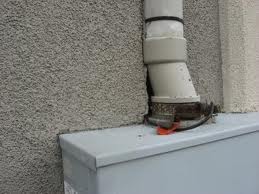
- Vents, hose bibs, light fixtures, electrical boxes, signs, and other penetrations
- Roof-to-wall, chimney, parapet, and coping details
- Accent bands, trim shapes, and other projecting details
Joint location matters because water may enter at one detail and appear somewhere else. Staining below a window, for example, does not prove that the lowest visible gap is the only failure point.
How Failed or Cracked Caulk Is Repaired
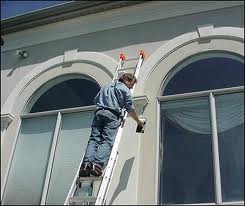
Professional caulking repair begins with the failed joint and the materials around it. Depending on the condition, the work may include:
- Reviewing the sealant, adjacent EIFS or stucco, and nearby flashing or transitions
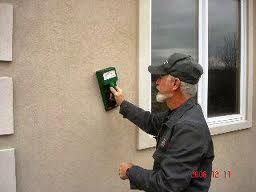
- Identifying open joints, loss of adhesion, splits, hardening, and signs of moisture entry
- Removing deteriorated sealant without causing unnecessary damage to the wall system
- Checking whether the joint edges and surrounding materials are clean, dry, sound, and suitable for new sealant
- Correcting damaged joint edges or related EIFS details when they are part of the failure
- Installing backing material, primer, and compatible sealant when required by the joint design and product manufacturers’ instructions
- Tooling the new sealant so the joint has the intended shape and contact with the prepared bond surfaces
- Reviewing other visible joints that may be approaching the same condition
The exact steps depend on the existing wall system, joint geometry, access, and what is found after the old material is removed.
Why EIFS Sealant Replacement Requires the Right Detail
EIFS sealant joints have to accommodate movement without pulling the wall finish apart or releasing from the joint edge. The sealant type, joint width and depth, bond surfaces, backing material, and primer requirements all affect performance.
General-purpose caulk is not an automatic substitute for an EIFS-compatible sealant system. Manufacturer requirements also matter. Applying new sealant over failed material or bonding it to an unsuitable surface can leave the original weakness in place.
Properly sealed gaps help the building envelope manage rain and joint movement. Sealing around windows and doors may also reduce unwanted air leakage and support energy efficiency, but caulking cannot correct missing insulation or other wall defects.
Indiana Wall Systems evaluates the existing detail and provides caulk joint or expansion-joint recommendations that fit the wall condition and applicable manufacturer guidance.
When Failed Caulk Points to a Larger EIFS Problem
Sealant replacement may be the full repair when the joint has failed but the surrounding EIFS and substrate remain sound. A broader evaluation may be needed when the area also has persistent staining, soft or spongy material, damaged finish, recurring interior leaks, or a joint that continues to fail after previous repairs.
Those signs can indicate moisture behind the cladding, damaged substrate, flashing problems, or movement that the existing joint was not designed to handle. In that situation, replacing the caulk alone may not correct the source of the problem. Sealant is part of water management, but a new bead cannot make faulty flashing, drainage, or damaged wall materials waterproof.
Learn more about EIFS inspection services and EIFS repair.
Residential and Commercial Caulking for Indiana Properties
Indiana Wall Systems repairs exterior sealant joints on homes and commercial buildings. Residential caulking often involves windows, doors, chimneys, roof intersections, and transitions between EIFS and other exterior materials. Commercial caulking may include larger joint runs, storefronts, wall penetrations, expansion joints, parapets, masonry transitions, and phased work around occupied areas.
Indianapolis caulking projects range from window and door joints on homes to larger commercial properties and managed buildings. Property managers can use the evaluation to distinguish isolated sealant replacement from areas that also need EIFS repair or restoration.
Each estimate is based on the visible joint failure, access, surrounding materials, and whether related wall repairs are needed.
Choosing a Caulking Contractor for EIFS or Stucco
A painter or handyman service may handle basic interior caulk, but exterior EIFS joints are part of a moving wall system. Before selecting a caulking contractor, ask how the existing sealant will be removed, how compatibility will be checked, whether the joint needs backing material or primer, and how surrounding EIFS damage will be handled.
A commercial caulking contractor should also be able to discuss access, occupied areas, joint movement, material transitions, and whether the work can be phased. The goal is a repair recommendation tied to the building condition, not a promise that every gap needs the same product or procedure.
Caulking Repair Across Central Indiana
Indiana Wall Systems provides caulking services in Indianapolis and across Central Indiana, including Carmel, Fishers, Zionsville, Greenwood, Bloomington, Columbus, and nearby communities.
Owner Jeff Johnson has worked in EIFS since 1989. Indiana Wall Systems has contracted EIFS, stucco, and plaster work since 2000.
If you see cracked, separated, or missing exterior caulk, request an evaluation before moisture has more time to reach the materials behind the finish.
Contact Indiana Wall Systems for a free estimate or call 765-341-6020.
Frequently Asked Questions
Can new caulk be applied over old caulk?
Generally, old or failed caulk should be removed first. A lasting repair requires clean, sound surfaces so the new sealant can bond properly. Applying new caulk over cracked or separated material may hide the opening without correcting poor adhesion, damaged joint edges, or an improper joint shape.
Can caulking stop a water leak?
It can when the failed joint is the water-entry point and the surrounding wall details remain sound. If flashing, drainage, EIFS layers, or substrate are also damaged, the repair scope may need to include those conditions.
What type of caulk should be used with EIFS?
The product should be compatible with the specific EIFS materials and appropriate for the joint’s movement and exposure. Manufacturer guidance may also call for particular bond surfaces, backing material, or primer. General-purpose caulk should not be assumed to meet those requirements.
What is the difference between caulk and sealant?
As mentioned above, the words are often used interchangeably. In exterior construction, sealant usually refers to a flexible product selected for joint movement, weather exposure, and compatibility with the adjoining surfaces. Caulk is a broader term used for many interior and exterior gap-filling products.
Will replacing failed caulk stop an EIFS leak?
It can when the failed joint is the water-entry point and the surrounding wall details remain sound. If flashing, drainage, EIFS layers, or substrate are also damaged, the repair scope may need to include those conditions.
How can I tell whether a sealant joint has failed?
Look for separation from the joint edge, cracks through the bead, brittle material, open ends, missing sections, or staining near the joint. A joint that repeatedly opens after repair should be evaluated for movement, geometry, compatibility, and adjacent wall conditions.
How often should exterior caulking be replaced?
There is no single replacement schedule for every building. Exposure, movement, product type, installation, and the condition of the adjoining surfaces all affect service life. Exterior joints should be inspected periodically and repaired when they crack, separate, harden, or leave an open gap.
What affects the cost of caulking services in Indianapolis?
Cost depends on the amount and location of failed caulk, access, removal and surface preparation, joint dimensions, material requirements, and whether surrounding EIFS or substrate also needs repair. Indiana Wall Systems evaluates the condition before providing a free estimate.
Should a painter or handyman repair EIFS caulking?
Basic interior caulking may be within a painter’s or handyman’s scope. EIFS joints require an understanding of wall-system movement, compatible sealants, prepared bond surfaces, backing materials, and adjacent moisture conditions. Ask whether the contractor regularly works with EIFS before assigning the repair.
Does Indiana Wall Systems handle residential and commercial caulking repair?
Yes. Indiana Wall Systems evaluates and repairs exterior sealant joints on residential and commercial EIFS and stucco buildings across Central Indiana.