What 2025 Taught Us About EIFS Performance in the Real World
Every year teaches something new about how Exterior Insulation and Finish Systems hold up in the real world. Some years are gentle. Others put buildings through the wringer. 2025 fell firmly into the second category.
This year brought Indiana property owners face to face with what works, what fails, and what too many people overlook until it becomes expensive. From temperature swings that dropped 40 degrees in a single afternoon to stubborn moisture problems hiding behind perfectly good-looking finishes, the patterns that emerged this year tell a clear story.
Indiana Wall Systems has spent more than 25 years working with EIFS repair and restoration across central Indiana. Looking back on 2025, the lessons are worth documenting. Not because they are surprising (most are not), but because they keep repeating. Property owners who understand these patterns can protect their buildings going into 2026 and beyond.
This article breaks down what stood out this year. It covers inspection findings, recurring failures, repair decisions, maintenance gaps, and what the weather revealed about older systems. Whether you own a home in Carmel, manage a commercial property in Indianapolis, or are buying a building with EIFS, this review is grounded in what actually happened on job sites across the state.
Key Takeaways
- Sealant failures topped the list of issues observed in 2025, with window and door joints showing the highest failure rates due to age, UV exposure, and thermal movement.
- 35 to 40 percent of visually sound properties showed elevated moisture readings during invasive testing, proving that surface appearance does not tell the whole story.
- Barrier EIFS systems from the 1990s and early 2000s are now 20 to 30 years old and showing their age, with concealed deterioration becoming more common.
- Temperature swings of 40+ degrees in a single day stressed expansion joints and sealants, causing cracking patterns in buildings with improper joint spacing.
- Drainage EIFS outperformed barrier systems across the board, reinforcing why modern codes require drainage on framed wall assemblies.
- Annual visual inspections and scheduled sealant replacement (every 7 to 10 years) remain the most cost-effective ways to prevent major repairs.
- Pre-purchase EIFS inspections saved buyers from inheriting hidden damage and gave sellers leverage through documented system condition.
What Indiana Weather Revealed About EIFS in 2025
Indiana’s climate is hard on exterior wall systems. That has always been true. But 2025 pushed the limits in ways that exposed weak points in EIFS installations across the region.
Temperature Swings and Thermal Stress
This year brought some of the most dramatic temperature swings in recent memory. Multiple events saw temperatures drop 40 degrees or more within a six-hour window. These rapid shifts create thermal stress that shows up as cracking, joint separation, and finish coat deterioration.
Buildings with missing or improperly placed expansion joints took the hardest hits. Thermal movement needs somewhere to go. When control joints are spaced too far apart or skipped entirely, the stress transfers directly into the finish coat. The result is cracking patterns that spread across wall sections, sometimes radiating from windows and corners.
Field observation from 2025: Properties inspected after major temperature swings showed a noticeable uptick in hairline cracking and sealant separation. Buildings with proper joint spacing (typically every 10 to 12 feet, or at floor lines and major openings) weathered the same events with far less visible damage.
Freeze-Thaw Cycles and Hidden Moisture
The Midwest averages dozens of freeze-thaw cycles per winter. When moisture is present behind the finish coat, those cycles cause cumulative damage that compounds over time.
In 2025, several inspections revealed soft or spongy EIFS in areas where water had been infiltrating undetected. In many cases, the finish coat still looked fine from the street. The problem only became apparent when tested with a moisture meter or when someone pressed against the wall and felt give.
Why does this matter? Because once moisture is trapped inside an EIFS assembly, freeze-thaw cycles cause the water to expand and contract repeatedly. That action breaks down the bond between the base coat and insulation, and between the insulation and substrate. Left unchecked, it leads to delamination, rot in wood sheathing, and corrosion in steel studs.
Wind-Driven Rain Exposure
Several storm systems this year brought heavy rain paired with sustained high winds. Wind-driven rain is particularly aggressive because it can push water into sealant joints, around window and door frames, and behind improperly detailed termination points.
Properties in exposed locations (ridgetops, open farmland, buildings without tree cover) showed more evidence of water intrusion after major rain events. This reinforced what experienced installers already know: detailing matters. A joint that holds up fine in calm conditions can fail when rain hits the wall at an angle under 40 mph gusts.
Humidity and Condensation Concerns
Central Indiana’s humid summers create conditions where condensation can form within wall assemblies. When warm, moist air meets a cooler surface inside the wall, moisture condenses. Over time, this contributes to elevated moisture levels even without obvious water entry points.
Buildings without proper vapor control showed evidence of this pattern in 2025 inspections. The moisture readings were not catastrophic in most cases, but they were elevated enough to warrant monitoring. Left unaddressed over multiple seasons, condensation-related moisture can contribute to the same problems as direct water intrusion: material degradation, biological growth, and substrate damage.
Seasonal Stress Patterns by Quarter
Looking at the repair calls and inspection requests that came in through the year, a pattern emerges:
Each season brings its own stresses. Property owners who understand this cycle can time their maintenance activities more effectively. Spring and fall are typically the best windows for repair work, when temperatures are moderate and humidity is manageable.
Inspection Findings: What 2025 Uncovered
Inspections are where the truth comes out. This year, Indiana Wall Systems conducted routine, pre-purchase, and post-storm inspections across dozens of properties. Certain patterns showed up again and again.
Visual Inspection vs. Invasive Testing
Most EIFS inspections start with a visual assessment. An experienced inspector walks the building, looking for cracks, staining, biological growth, sealant condition, and termination details. But visual inspection has limits.
Moisture testing (using a moisture meter with probes inserted through the finish coat) reveals what the eye cannot see. In 2025, approximately 35 to 40 percent of properties that appeared sound on visual inspection showed elevated moisture readings in at least one area during invasive testing.
That does not mean every building is failing. It means that hidden moisture is more common than most property owners expect. Buildings with older barrier EIFS (systems installed without a drainage plane) are especially prone to concealed moisture problems.
Pre-Purchase Inspections: A Growing Trend
More buyers are requesting EIFS inspections before closing on properties. This was a consistent trend throughout 2025. Buyers are becoming more aware of the risks associated with older or poorly maintained synthetic stucco systems.
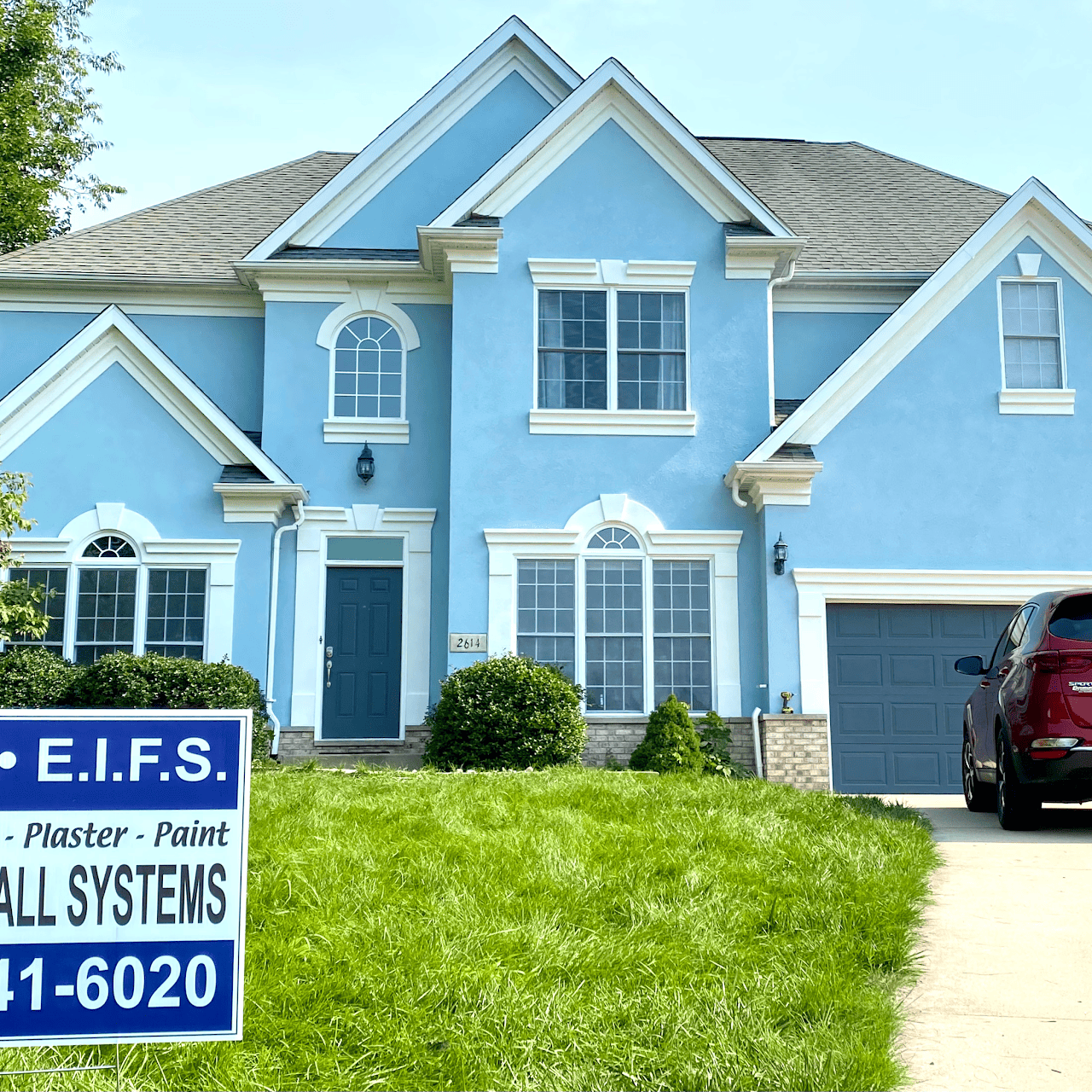
In several cases, inspection findings led to renegotiated sale prices or seller-funded repairs. In others, buyers walked away after discovering extensive hidden damage. Either way, the inspection protected them from inheriting an expensive problem.
Takeaway for sellers: Addressing known issues before listing avoids surprises during due diligence. A property with documented repairs and a clean inspection report sells more confidently than one with deferred maintenance.
Post-Storm Inspections
Following major weather events, post-storm inspections became more common in 2025. Property owners learned that visible damage (missing finish coat, obvious cracks) is often just part of the story.
After storms with high winds, inspectors look for:
- Impact damage from debris, tree branches, or hail
- Sealant displacement caused by building movement or pressure changes
- Flashing damage where high winds lifted or separated components
- Water intrusion at newly created entry points
One valuable lesson from this year: not all storm damage is immediately visible. Some problems only become apparent weeks or months later, when moisture that entered during the storm causes staining, soft spots, or biological growth. Property owners are wise to document conditions before and after major storms, and to schedule a follow-up inspection if any concerns arise.
For detailed guidance on what to check after severe weather, see the post on post-storm EIFS checks and ensuring structural integrity.
Thermal Imaging Observations
Some inspections in 2025 incorporated thermal imaging to identify hidden moisture and insulation voids. Thermal cameras detect temperature differences on the wall surface that can indicate:
- Wet insulation (which conducts heat differently than dry material)
- Missing insulation (cold spots in winter, hot spots in summer)
- Air leakage paths (where conditioned air escapes or enters)
While not every inspection requires thermal imaging, it proved valuable on larger commercial properties and on buildings with suspected widespread moisture issues. The technology does not replace invasive testing, but it helps direct where to probe, making the inspection more efficient and thorough.
Moisture Intrusion: The Recurring Problem
If there is one issue that dominated EIFS repair work in 2025, it is moisture intrusion. Water finds its way behind the finish coat through failed sealants, improper flashing, damaged termination details, and penetrations that were never properly sealed.
Where Moisture Gets In
The most common entry points observed this year include:
- Window and door frames where sealant has cracked, shrunk, or pulled away from the substrate
- Roof-to-wall intersections with missing or deteriorated kick-out flashing
- Deck ledger boards and other penetrations that interrupt the water-resistive barrier
- Base of wall terminations where the EIFS extends too close to grade or where landscaping has buried the system
- Expansion joints where backer rod and sealant have failed
Why Drainage Systems Matter
Modern EIFS systems are designed with drainage. A drainage plane (a grooved or channeled layer behind the insulation) allows any water that enters the system to flow down and out through weep channels at the base.
Older barrier EIFS systems lack this feature. They rely entirely on keeping water out. When the outer seal fails, water has nowhere to go. It sits behind the finish coat, soaking into the insulation and substrate.
The 2024 International Building Code and International Residential Code now require EIFS with drainage on framed wall assemblies. This is not new, but 2025 brought more conversations with property owners who did not realize their older system lacked drainage. Upgrading from barrier EIFS to a modern drainage EIFS system remains one of the most effective ways to protect a building long-term.
Trapped Moisture and What It Causes
Once moisture is trapped behind EIFS, the damage spreads in stages:
Substrate Damage: What Lies Behind the EIFS
When moisture infiltrates the system, the substrate takes the hit. In 2025, several remediation projects revealed the hidden damage that can accumulate behind a finish coat that still looks presentable from the street.
Wood sheathing damage was the most common substrate problem. Oriented strand board (OSB) and plywood sheathing absorb moisture and begin to degrade. OSB is particularly vulnerable because its layered composition swells and delaminates when wet. By the time the damage is discovered, large sections may need replacement.
Steel stud corrosion appeared in some commercial properties. While less common than wood damage, corroded steel framing is harder to address because it affects the structural system. Corrosion typically starts at fastener locations where moisture collects.
Fastener corrosion was observed even in buildings where the substrate was still sound. Corroded fasteners lose holding capacity, which can eventually allow the insulation board to separate from the wall. This problem is more common with older installations that used fasteners without adequate corrosion protection.
Concealed Deterioration in Older Buildings
Properties built in the 1990s and early 2000s with barrier EIFS have now been in service for 20 to 30 years. That is a long time for a system that depends on perfect sealing to keep water out.
In 2025, several inspections of older properties revealed concealed deterioration that had been progressing slowly for years:
- Delamination between base coat and insulation (the base coat separates, often cracking in the process)
- Debonding between insulation and substrate (insulation board pulls away from the wall)
- Biological growth inside the wall cavity (mold and mildew that are not visible from outside)
These findings underscore the importance of regular inspection for aging EIFS. A building that has performed well for 20 years is not guaranteed to perform well for another 20 without attention.
Sealant and Flashing Failures: A 2025 Snapshot
Sealants and flashings are the first line of defense. When they fail, water gets in. This year, sealant-related failures were among the most frequently observed issues.
Sealant Aging and Compatibility
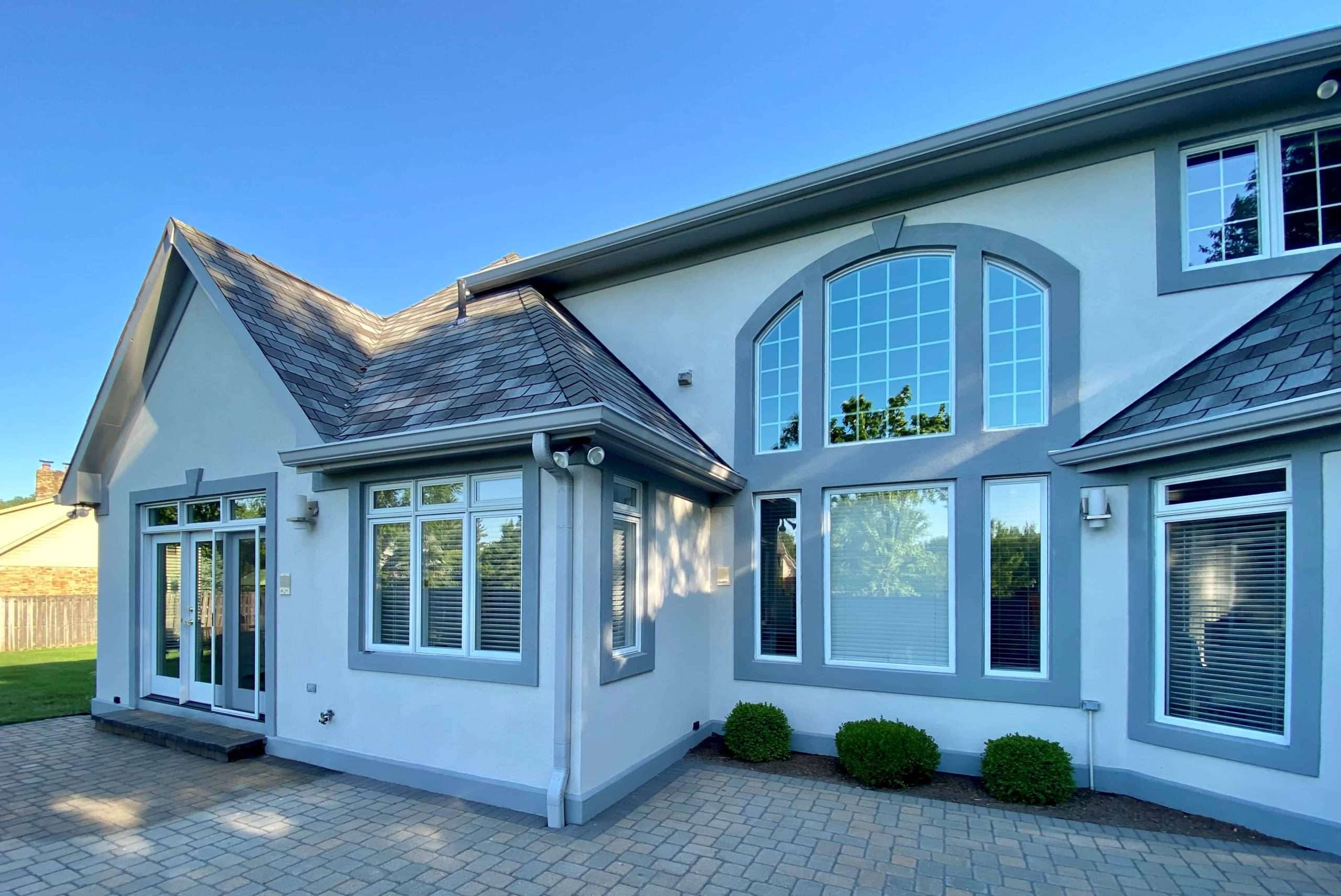
Most exterior sealants have a service life of 7 to 15 years, depending on exposure, quality, and application. By 2025, many buildings with EIFS installed in the 2010s are reaching the point where original sealants need attention.
Signs of sealant failure include:
- Cracking or checking along the sealant surface
- Pulling away from one or both sides of the joint
- Hardening and loss of flexibility
- Visible gaps or missing sections
One pattern observed this year involved sealant that was incompatible with the EIFS finish coat. Some silicone sealants do not bond well to acrylic finishes. When the wrong sealant is used, the joint may look fine initially but fail within a few years.
For this reason, working with an experienced EIFS caulking contractor who understands manufacturer specifications is critical. A proper joint uses compatible sealant, correct backer rod sizing, and appropriate joint geometry.
Flashing Failures
Flashings (metal or membrane components that direct water away from vulnerable transitions) are often installed incorrectly or omitted entirely in older EIFS applications.
Flashing repairs can be involved. In many cases, correcting a flashing problem means removing a section of EIFS, installing proper flashing, and then patching or replacing the cladding.
Installation Quality: Patterns From the Field
Not all EIFS problems trace back to weather or age. Many originate with the installation itself. In 2025, repair work and inspections revealed patterns that point to installation quality as a root cause.
Legacy Installation Methods
Buildings installed before modern standards took hold often show characteristic problems:
- Insufficient mesh overlap at corners and joints, leading to cracking at these locations
- No reinforcement at openings (windows, doors, and penetrations should have diagonal mesh strips at corners)
- Single-pass base coat application instead of the recommended two-pass method with full mesh embedment
- Missing or improperly sized expansion joints allowing thermal stress to accumulate
These legacy methods were common practice at the time. Installers were not necessarily doing poor work by the standards of their era. But those standards have evolved, and buildings constructed under earlier practices now show the consequences.
Installer Experience Matters
EIFS is not a commodity product that any siding contractor can install. The system requires understanding of water management, thermal movement, material compatibility, and proper sequencing. When installers cut corners or lack proper training, the results show up years later.
In 2025, several repair projects involved correcting work done by contractors who were clearly unfamiliar with EIFS best practices. Common errors included:
- Finish coat applied too thick or too thin (either reduces durability)
- Base coat left to cure too long before finish (weakens bond)
- Insulation boards installed with gaps (creates thermal bridges and water paths)
- Inadequate adhesive coverage (insulation not fully bonded to substrate)
- Incorrect sealant or backer rod selection (joint failure within a few years)
For homeowners and property managers evaluating contractors, asking about EIFS-specific training and certification matters. General construction experience does not substitute for specialized knowledge.
Jobsite Conditions and Timing
Even skilled installers can produce poor results if jobsite conditions are wrong. EIFS materials have application temperature ranges (typically above 40°F and below 90°F, depending on the product). Applying finish coat in direct sun on a 100-degree day or base coat when temperatures are about to drop below freezing invites problems.
In 2025, some callbacks involved work done during temperature extremes. The lesson: proper scheduling and weather monitoring are part of quality installation.
Repair vs. Replacement: How 2025 Shifted the Conversation
Every repair project starts with the same question: Is this fixable, or does the whole thing need to come off? In 2025, that question came up often.
When Repairs Make Sense
Localized repairs are appropriate when:
- Damage is confined to a specific area (one wall section, one window opening)
- The underlying substrate is sound
- The drainage system (if present) is functioning
- Sealants and flashings can be replaced without disturbing large areas
A skilled EIFS repair contractor can often blend new finish coat with existing surfaces so the patch is nearly invisible. Texture matching and color matching require experience, but the results can be excellent.
When Replacement Is the Only Option
Full or partial replacement becomes necessary when:
- Moisture has compromised the substrate (rotted sheathing, corroded framing)
- The existing system is barrier EIFS with widespread failure
- Damage is too extensive to patch cost-effectively
- The building is being renovated and code upgrades are required
Replacement is more expensive upfront but eliminates the recurring cycle of repairs. For buildings with chronic moisture problems, replacing barrier EIFS with a properly detailed drainage system often makes more financial sense over a 10 to 15 year horizon.
The Repair Decision Framework
Texture and Color Matching
One concern property owners raise about repair work is whether patches will blend with the existing finish. The short answer is: they can, but it requires skill.
Texture matching depends on understanding the original application method. Different tools and techniques produce different patterns (sand finish, dash finish, swirl finish, and various custom textures). An experienced repair team can often replicate the original texture closely.
Color matching is trickier because EIFS finishes fade over time due to UV exposure. A perfect factory match to the original color may stand out against a wall that has weathered for 15 years. Options include:
- Feathering the new finish into the old (works for small areas)
- Recoating the entire wall section (for larger repairs)
- Repainting the building or affected facade (restores uniform appearance)
In 2025, several projects opted for repainting after repair to ensure a consistent appearance. This adds cost but delivers a finished look that masks the repair work entirely.
Cost Considerations: Repair vs. Replace
Cost is always a factor. As a general guide, targeted repairs range from a few hundred to a few thousand dollars depending on scope. Full wall remediation can run $15 to $30 or more per square foot, including removal, substrate repair, and new system installation.
The calculation becomes more favorable toward replacement when:
- Repair costs would exceed 40 to 50 percent of replacement cost
- The building has chronic moisture history requiring repeated repairs
- Energy efficiency improvements justify the investment
- A sale or refinance is planned where system condition affects value
For commercial properties, capital planning cycles also influence the decision. Some property managers defer replacement until a scheduled building refresh, using targeted repairs to manage risk in the interim.
Energy Efficiency: What EIFS Delivered in 2025
Beyond water management, EIFS provides significant energy efficiency benefits. The continuous insulation layer reduces thermal bridging (heat loss through framing members) and creates a more uniform thermal envelope than traditional cavity insulation alone.
Thermal Performance Observations
Buildings with well-maintained EIFS consistently showed lower heating and cooling costs compared to similar buildings with other cladding systems. While Indiana Wall Systems does not conduct formal energy audits, property owners frequently report noticeable differences, especially after upgrading from less efficient exterior wall systems.
The energy codes continue to tighten. The International Energy Conservation Code (IECC) and ASHRAE 90.1 both include requirements for continuous insulation that EIFS satisfies efficiently. Buildings undergoing major renovations or additions may find that EIFS helps meet updated energy code requirements more cost-effectively than alternative approaches.
Continuous Insulation and Air Barrier Continuity
Modern EIFS systems can achieve up to 36 percent annual energy savings through air leakage reduction when combined with proper air and moisture barrier installation. When continuous insulation is added to the exterior, the potential savings increase further.
The key factors that affect real-world energy performance include:
- Insulation thickness (thicker EPS or mineral wool provides higher R-value)
- Air barrier continuity (gaps and penetrations reduce effectiveness)
- Window and door performance (openings are often the weakest thermal link)
- Building orientation and exposure (south-facing walls gain more solar heat)
For property owners interested in maximizing efficiency, the post on EIFS energy efficiency and reducing heating and cooling costs covers this topic in more depth.
When Energy Savings Justify Upgrades
Several 2025 projects involved property owners who chose EIFS restoration or replacement specifically for energy improvement. The calculation works when:
- Current utility costs are high relative to building size
- The existing system has poor air sealing or missing insulation
- Available rebates or tax credits offset installation costs
- The property will be held long enough to recapture the investment
For commercial buildings, energy improvements can also support sustainability certifications (LEED, ENERGY STAR) that have marketing value.
Maintenance Lessons: What Property Owners Learned
Maintenance is not glamorous. It does not get the attention that new installations or major renovations receive. But 2025 reinforced a simple truth: preventive maintenance costs less than emergency repairs.
Deferred Maintenance Catches Up
Several projects this year involved buildings where minor issues had been ignored for years. Hairline cracks left unsealed. Sealant joints never replaced. Grade built up around the base of the wall. Each of these small problems allowed water to enter. Over time, the damage spread.
The cost difference is significant. Recaulking a window opening might run a few hundred dollars. Remediating an entire wall section with rotted sheathing can run into the thousands.
Maintenance Actions That Made a Difference
Property owners who stayed on top of maintenance in 2025 avoided many of the problems others experienced. The most effective maintenance actions include:
- Annual visual inspection of all sealant joints, especially around windows, doors, and penetrations
- Cleaning the exterior with low-pressure water to remove dirt, mildew, and debris
- Checking termination details at grade, rooflines, and deck attachments
- Addressing small cracks before they widen and allow moisture entry
- Keeping landscaping clear of the wall base (minimum 6 inches of clearance above grade)
For more on scheduling and scope, see the guidance on EIFS maintenance and preserving your investment.
Building Code and Compliance Patterns
Building codes evolve. What was acceptable 20 years ago may no longer meet current standards. In 2025, several inspection and repair projects raised code-related questions.
Drainage Requirements
The 2024 International Residential Code requires EIFS with drainage on all framed wall assemblies (except masonry or concrete substrates, where barrier EIFS is still permitted). Systems must achieve a minimum 90 percent drainage efficiency per ASTM E2273.
Older homes with barrier EIFS are not automatically required to upgrade. But when major repairs or renovations trigger permit review, local code enforcement may require compliance with current standards.
Termination Height at Grade
EIFS must terminate at least 6 inches above finished grade. This requirement prevents ground-contact moisture from wicking into the system. It also allows for visual inspection of the termination detail.
In practice, many older installations violate this rule. Landscaping additions, patios, and settled soil often bring the grade too close to (or above) the EIFS termination. Correcting this requires either lowering the grade or modifying the wall assembly.
Fire Rating Considerations
EIFS assemblies using expanded polystyrene (EPS) insulation are classified as combustible. Under the International Building Code, these systems must be tested for fire performance per NFPA 285 on taller buildings.
For residential and low-rise commercial buildings, fire rating is less commonly an issue. But property managers considering EIFS for hospitals, clinics, or other specialized occupancies should confirm code compliance with their design team.
What Buyers and Sellers Learned About EIFS
Real estate transactions involving EIFS properties require due diligence. In 2025, both buyers and sellers gained sharper awareness of what that means.
For Buyers
The key lesson for buyers is simple: get an inspection. A general home inspection may not catch EIFS-specific problems. Hiring an inspector with experience in synthetic stucco, or having a qualified EIFS contractor evaluate the property, provides much better protection.
Buyers who skipped this step sometimes discovered costly problems after closing. Hidden moisture, failed flashing, and substrate damage are not always visible to the untrained eye.
For Sellers
Sellers benefit from upfront disclosure and repair. A property with documented maintenance history and a recent clean inspection sells more easily than one with unknown condition.
Some sellers in 2025 chose to complete repairs before listing. Others provided repair credits to buyers. Either approach is better than having inspection findings derail a sale late in the process.
For more on selling an EIFS property, see the guide on preparing and selling EIFS homes and commercial buildings.
Regional Observations Across Central Indiana
EIFS performance varies by location. Exposure, microclimate, and local building practices all play a role. Here are patterns observed across different parts of central Indiana in 2025.
Hamilton County (Carmel, Fishers, Zionsville)
This area has a high concentration of EIFS homes, particularly in upscale subdivisions built in the 1990s and 2000s. Many of these properties feature older barrier EIFS systems.
In 2025, pre-purchase inspections in Carmel and Fishers frequently revealed moisture issues around second-story window openings and at deck attachments. These are common failure points in two-story construction where drainage and flashing details are most critical.
The Village of WestClay in Carmel deserves special mention. This planned community features numerous EIFS homes, many now approaching 15 to 20 years of age. Proactive homeowner associations and informed residents have helped maintain these properties better than average, but the aging systems still require attention. Window sealant replacement and periodic inspection remain priorities.
Marion County (Indianapolis, Speedway)
Commercial properties in Indianapolis showed a mix of well-maintained EIFS and deferred-maintenance buildings. Strip centers and office complexes with regular maintenance programs fared better than those where repairs had been postponed.
One recurring theme: sealant replacement on commercial facades is often delayed because of cost or scheduling. But waiting too long allows water intrusion, turning a routine maintenance item into a major repair.
Multi-family residential buildings in Marion County presented their own challenges. Common-area EIFS (around entryways, clubhouses, and building exteriors) sometimes receives inconsistent maintenance as property management changes over time. Buildings that established clear maintenance protocols under one owner sometimes saw those protocols lapse under new ownership.
Johnson County (Greenwood, Franklin)
Properties in Greenwood and surrounding areas showed patterns similar to Hamilton County, though with a somewhat younger building stock on average. Newer subdivisions in this area often feature modern drainage EIFS, which performed well.
Older homes in established neighborhoods still have barrier systems that require the same vigilance as their Hamilton County counterparts.
Suburban and Rural Properties
Properties in less densely developed areas sometimes face unique challenges. Longer exposure to wind (fewer neighboring buildings for shelter), distance from contractors (leading to deferred service calls), and septic or well-related grade changes near foundations.
Buildings in exposed locations should factor in more frequent inspections and scheduled sealant maintenance.
Commercial vs. Residential: Different Patterns, Same Principles
While the same materials and systems serve both commercial and residential buildings, the ownership and maintenance dynamics differ. These differences showed up clearly in 2025 observations.
Commercial Building Patterns
Commercial EIFS tends to be maintained on a scheduled cycle (when it is maintained at all). Property managers work from annual budgets and capital improvement plans. This can lead to:
- Scheduled sealant replacement when the property is well-managed
- Deferred maintenance when budgets are tight or ownership is distracted
- Large-scale repairs timed to tenant turnover or lease renewals
Commercial buildings also face different exposures. Ground-floor retail may see impact damage from shopping carts or delivery trucks. Office buildings may have extensive window walls with more linear feet of sealant to maintain. Multistory structures face more wind exposure on upper floors.
Residential Building Patterns
Homeowners often lack the technical knowledge to recognize developing EIFS problems. They may not know that sealant has a limited lifespan or that landscaping changes affect the system. This leads to:
- Reactive repairs after problems become visible or obvious
- Gaps in maintenance between owners when homes are sold
- Underestimation of scope (assuming a crack is just cosmetic)
On the positive side, homeowners who engage with their EIFS proactively often maintain their systems better than commercial buildings. A motivated homeowner who schedules regular inspections and addresses issues promptly can keep a system performing well for decades.
Property Manager Considerations
For those managing commercial properties or multi-family buildings, establishing a clear EIFS maintenance protocol is valuable. This includes:
- Annual visual walkthrough (documented with photos)
- Professional inspection every 3 to 5 years
- Sealant evaluation and replacement on a scheduled cycle
- Budget allocation for ongoing maintenance and reserves for larger repairs
Buildings with documented maintenance history command higher values and attract better tenants or buyers.
Lessons Going Into 2026
Looking back on 2025, several lessons stand out for property owners, managers, and buyers planning ahead.
1. Annual Inspections Pay Off
A quick annual walk-around (or a professional inspection every few years) catches problems early. Early detection means lower repair costs and less risk of hidden damage spreading.
2. Sealant Maintenance Is Not Optional
Every 7 to 10 years, sealant joints should be evaluated and replaced as needed. Waiting until failure occurs invites water intrusion.
3. Drainage Systems Are Worth the Investment
Buildings with drainage EIFS have a significant advantage over barrier systems. For properties still running on barrier EIFS, planning for an eventual upgrade is prudent.
4. Documentation Matters
Keep records of inspections, repairs, and maintenance. This documentation protects property value and simplifies future transactions.
5. Work With Qualified Contractors
EIFS is a specialized system. Repairs done incorrectly can cause more harm than good. Hiring contractors with proven EIFS experience (not just general stucco or siding knowledge) is essential.
Looking Forward
The patterns observed in 2025 will likely continue. Indiana’s weather will stress exterior wall systems. Moisture will find its way in through failed details. Older systems will age out. And property owners who stay ahead of maintenance will continue to save money over those who wait.
For property owners in central Indiana, the path forward is clear: inspect regularly, stay ahead of maintenance, and address problems before they spread. That approach has always worked. This year just reinforced it.
If you have questions about your EIFS system or want to schedule an inspection, contact Indiana Wall Systems to discuss your property.
Frequently Asked Questions
How often should EIFS be inspected in Indiana?
Most properties benefit from a professional EIFS inspection every 3 to 5 years, with annual visual checks by the property owner. Buildings older than 15 years, or those with known moisture history, should be inspected more frequently to catch developing issues before they spread.
What causes EIFS to feel soft when pressed?
Soft or spongy EIFS typically indicates moisture trapped behind the finish coat. This moisture breaks down the bond between the base coat and insulation, causing the wall to feel compressible. Immediate investigation and repair are recommended to prevent further damage to the substrate.
Can older barrier EIFS be upgraded to a drainage system?
Yes, but it usually requires removing the existing EIFS and installing a new drainage system with a proper water-resistive barrier and weep channels. This is a significant project, but it provides long-term protection that barrier systems cannot match.
Why do sealant joints fail around windows and doors?
Sealant joints fail due to UV exposure, thermal movement, age, and sometimes improper sealant selection. Most exterior sealants last 7 to 15 years. Once they crack, harden, or pull away from the substrate, water can enter the wall assembly at these vulnerable points.
Is it worth repairing EIFS or should I replace the whole system?
It depends on the extent and location of damage. Localized damage with sound substrate often justifies targeted repair. Widespread moisture intrusion, substrate rot, or repeated failures in barrier systems may warrant full replacement with a modern drainage EIFS.
How does Indiana weather affect EIFS differently than other climates?
Indiana’s frequent freeze-thaw cycles, wind-driven rain, and rapid temperature swings (sometimes 40 degrees in a few hours) create unique stresses. These conditions accelerate sealant aging, exploit weak flashing details, and cause thermal cracking more aggressively than milder climates.
What should I look for before buying a home with EIFS?
Request a specialized EIFS inspection (not just a general home inspection). Look for sealant condition around all openings, termination height at grade, signs of staining or biological growth, and ask whether the system includes drainage. Invasive moisture testing is recommended.
Does EIFS require special cleaning?
EIFS should be cleaned with low-pressure water and mild detergent. High-pressure washing can damage the finish coat and force water behind the cladding. Avoid abrasive cleaners or tools that could scratch or puncture the acrylic surface.
How long does EIFS typically last in Indiana?
With proper installation and maintenance, EIFS can last 30 years or more. The finish coat may need repainting or recoating every 10 to 15 years, and sealant joints require periodic replacement. Drainage systems tend to outlast barrier systems because they manage water more effectively.
What are the warning signs of EIFS problems?
Key warning signs include visible cracks (especially around windows and corners), soft or spongy areas when pressed, dark staining or discoloration, biological growth (mold, mildew, or algae), peeling or bubbling finish coat, and sealant that appears cracked, hardened, or missing.
Can EIFS be painted or recoated?
Yes, EIFS can be painted with compatible elastomeric or acrylic coatings. The surface must be properly prepared, and the paint or coating must be breathable to allow moisture vapor to escape. Using incompatible coatings can trap moisture and cause accelerated deterioration.
How does EIFS compare to traditional stucco for Indiana homes?
EIFS provides superior insulation and energy efficiency compared to traditional hard-coat stucco. It weighs less and offers more design flexibility. Traditional stucco is more impact-resistant but does not include built-in insulation. Both require proper installation and maintenance to perform well in Indiana’s climate.
What should I do if I notice cracks in my EIFS?
Small hairline cracks may be cosmetic, but any cracking should be evaluated. Cracks at window corners, expansion joints, or in patterns radiating from openings often indicate thermal stress or movement issues. Have a qualified inspector assess the cracks to determine whether repair is needed and what type.
Is EIFS safe? What about fire and moisture concerns?
Modern EIFS systems are tested for fire performance and must meet building code requirements. Drainage EIFS effectively manages moisture when properly installed. The concerns that gave EIFS a problematic reputation in the 1990s stemmed from barrier systems without drainage. Modern systems address those vulnerabilities.
Indiana Wall Systems has served central Indiana for over 25 years with 160 years of combined team experience. If you are unsure which category your building falls into, a professional EIFS inspection removes the guesswork. For inspections, repairs, and restoration across Indianapolis, Carmel, Fishers, Zionsville, and surrounding areas, call (765) 341-6020 or visit the contact page.