EIFS Inspection Services
in Central Indiana
Prevent Loss with a Proper EIFS Inspection
Moisture intrusion, failed sealant joints, window perimeters, roof-wall intersections, and hidden substrate damage are some of the most common issues found during EIFS inspections. Indiana Wall Systems inspects EIFS the way it needs to be inspected so the repair recommendations match the actual condition of the building.
Indiana Wall Systems inspects EIFS, synthetic stucco, and traditional stucco systems across Carmel, Fishers, Zionsville, Indianapolis, The Village of WestClay, and the rest of Central Indiana. The inspection process is built around the conditions that repeatedly show up in the field: failed sealants, moisture behind the cladding, window leaks, flashing defects, and substrate damage. Our article on what inspectors look for during an EIFS inspection explains many of these failure points in more detail.
If something looks wrong on the exterior, or if you are preparing to buy, sell, reroof, or replace windows on a stucco or EIFS building, an inspection helps identify what should be repaired, what should be monitored, and what questions should be answered before money gets spent in the wrong place.
Why EIFS Inspections Matter
EIFS is a layered exterior cladding system. Most EIFS problems do not start in the middle of a wall. They start at the details: window and door perimeters, lower terminations near grade, sealant joints, and roof, deck, or porch intersections. Water that slips behind the EIFS system can sit there for years without showing a stain inside, while the substrate, sheathing, or framing quietly takes the damage.
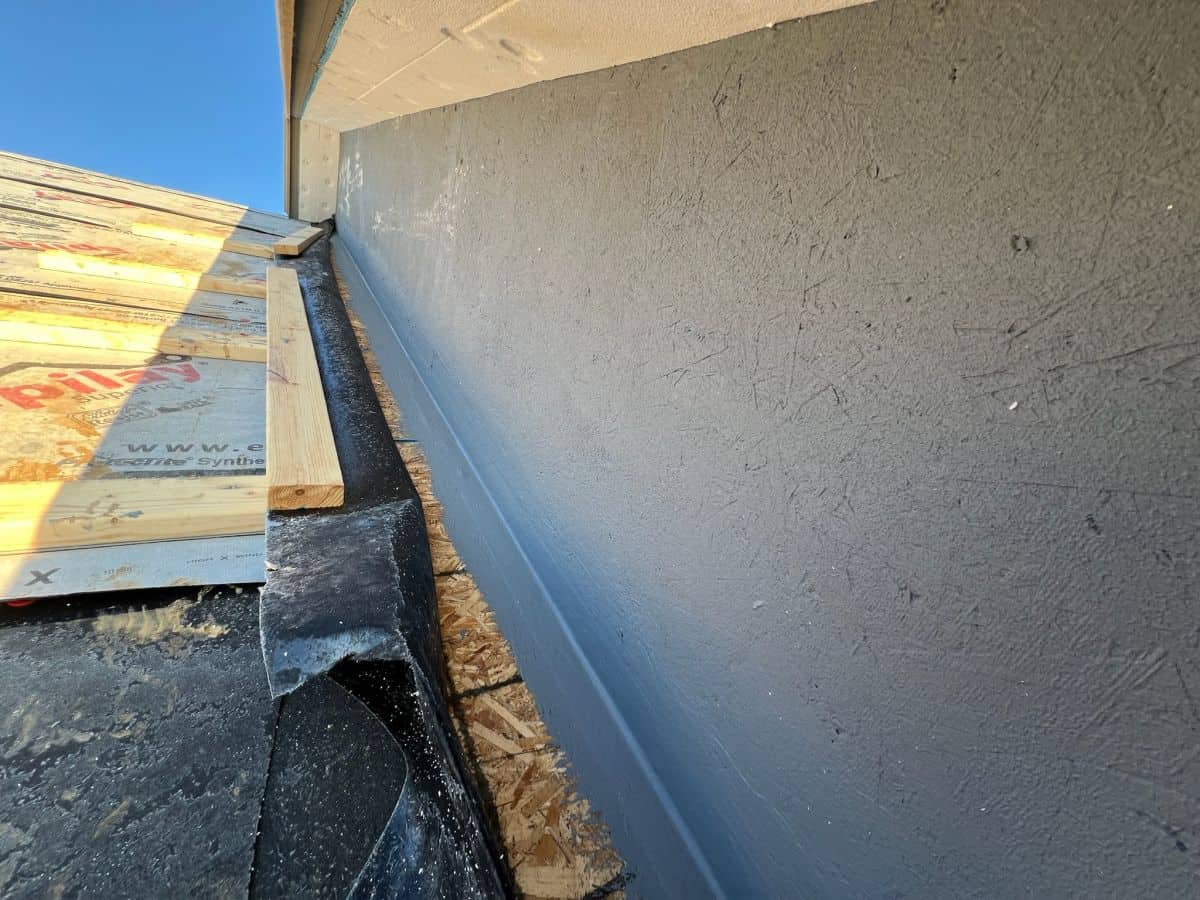
An EIFS inspection is the step where someone who understands the wall system looks at those details carefully, reads the visible clues, takes moisture readings where they are useful, and explains what the conditions mean for repair scope and risk. The point is not to scare anyone. The point is to know what you are dealing with so the next decision is the right one.
Older barrier EIFS, water-managed EIFS, stucco over foam, and traditional hard-coat stucco all behave differently. The inspection findings need to be interpreted with the wall details in mind, not just a moisture meter number on a screen. For older systems, our article on the risks of buying a home with older standard EIFS gives useful context before a purchase or repair decision.
When to Call for an EIFS Inspection
A few situations make an EIFS inspection worth the time and cost. If you see any of these conditions, calling sooner usually costs less than waiting until the damage spreads deeper into the wall system.
Six of the most common triggers we hear from property owners across Central Indiana.
Some of these warning signs are obvious. Others can go unnoticed while water slowly moves behind the EIFS system over multiple seasons. If the concern is tied to a real estate transaction, our guide on how often EIFS inspections should be done in Indiana can help you think through timing.
What an EIFS Inspection Checks
The walk-around process is methodical. The details that fail most often are usually the first areas checked during an EIFS inspection.
Window and door perimeters. Sealant condition, visible flashing details, slope at accent bands and window sills, and signs of staining or finish coat damage near corners.
Sealant joints. Control joints, expansion joints, penetrations, and transitions between different materials are checked for adhesive failure, cohesive failure, hardening, separation, and aging sealants that have reached the end of their service life.
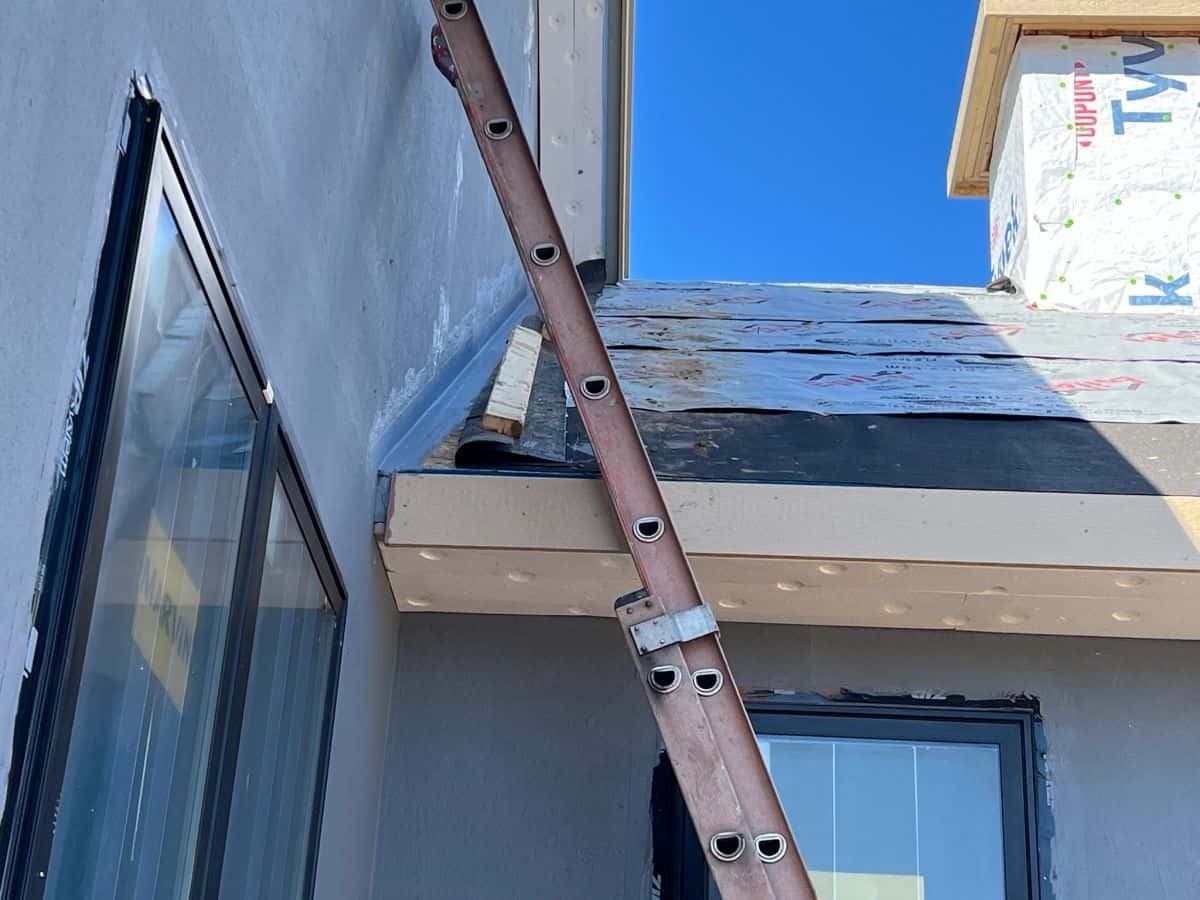
Flashing and kickout flashing. Where roofs terminate into EIFS walls, kickout flashing should direct water safely into the gutter system. Missing or improperly installed kickouts are one of the most common causes of hidden moisture intrusion. Our article on kickout flashing for EIFS walls explains why this small detail matters.
Roof-wall intersections. Step flashing, counterflashing, and EIFS termination details at roof transitions are inspected closely.
Parapets and coping details. On commercial buildings and custom homes, parapet walls and coping caps are common water entry points when detailing or drainage is inadequate.
Gutters and roof runoff. Overflowing or undersized gutters can dump large amounts of water directly against EIFS walls. The warning signs often appear near the base of the wall or behind landscaping.
Lower terminations and grade clearance. EIFS installed too close to mulch, soil, or hardscape creates a direct moisture pathway. Grade terminations are checked for proper clearance and back-wrap detailing.
Penetrations through the wall system. Vents, hose bibs, light fixtures, electrical boxes, railings, cameras, signs, mounted equipment, and other penetrations are checked for sealing and water management problems.
Cracks and finish coat defects. Crack pattern and location matter. Diagonal cracking near windows, vertical cracking at panel joints, and map cracking can each point to different underlying conditions.
Soft substrate areas. Areas are probed where moisture readings or visible conditions suggest damage may exist behind the EIFS system.
Drainage concerns. On water-managed EIFS, the drainage plane needs to remain functional. On older barrier EIFS, drainage was never part of the original design, which changes both the inspection findings and the repair recommendations.
Barrier EIFS vs. water-managed EIFS. Identifying which system is on the building changes the inspection logic, how moisture readings are interpreted, and what repair approaches make sense long term.
Where EIFS Problems Usually Start
The details fail before the wall fails. These are the eight areas we check first.
Inspection Methods That May Be Used
Depending on the building, visible conditions, access, and the reason for the inspection, an EIFS inspection may include some or all of the following methods.
- Visual inspection. Always the starting point. Trained eyes catch what general home inspectors typically miss because they are not looking for EIFS-specific failure patterns.
- Moisture meter readings. Surface and pin-type readings at suspect locations. Readings are most useful when interpreted with the wall assembly in mind.
- Probe moisture testing. Where readings or visible signs justify it, small probes can be inserted into the substrate to measure moisture content behind the cladding. Probe holes are sealed afterward.
- Infrared and thermal imaging. Useful for finding temperature anomalies that may indicate trapped moisture, missing insulation, or wet substrate. Thermal imaging works best under the right conditions and is interpreted alongside other findings.
- Photos and documentation. Damaged or suspect areas are photographed for the inspection report. Our guide on how to read an EIFS inspection report explains how findings are typically documented and prioritized.
- Sealant joint evaluation. Adhesion, cohesion, joint width, backer rod presence, and material type.
- Substrate condition review. Where access allows, the substrate behind suspect EIFS is evaluated.
- Repair scope recommendations. What needs to be repaired, in what order, and with what general approach.
Not every inspection requires every method. A pre-purchase inspection on a smaller home differs from a phased commercial assessment on a multi-building property.
Inspection Methods and What They Help Identify
Depending on the building and the reason for the inspection, one or more of these methods may be used.
| Method | What It Helps Identify |
|---|---|
| Visual inspection | Cracks, staining, finish coat damage, sealant condition, flashing visible from outside. |
| Moisture meter readings | Elevated moisture levels at suspect locations such as below windows or near grade. |
| Probe moisture testing | Substrate moisture content behind the cladding where surface readings raise concerns. |
| Infrared / thermal imaging | Temperature anomalies suggesting trapped moisture, missing insulation, or wet substrate. |
| Sealant joint evaluation | Adhesive failure, cohesive failure, joint width, backer rod presence, sealant type. |
| Substrate condition review | Soft, rotted, or damaged sheathing where access allows safe verification. |
| Photo documentation | A visual record of conditions for the inspection report and any future comparison. |
| Repair scope recommendations | A written plan for what to repair, in what order, and with what general approach. |
Why EIFS Inspections Are Different From General Home Inspections
General home inspectors do important work, and many are excellent at their job. EIFS is a specialty. The system has layers, drainage paths, and failure patterns that are not part of a typical home inspection.
A general home inspection report may flag cracks, staining, or soft spots. What the report often cannot do is explain whether the EIFS is an older barrier system or a modern water-managed system, what the moisture readings mean given the substrate, where the water is most likely entering, and what the repair scope and sequence should be. For more context, see our guide on the risks of buying a home with older standard EIFS.
Indiana Wall Systems inspects EIFS knowing what comes next. If a wall section needs to be opened, we know how. If sealant joints have failed, we know what to specify. If accent bands have the wrong slope, we know how to reshape them. That field experience changes the inspection from a list of findings into a usable plan.
This is not a knock on home inspectors. It is a recognition that EIFS, synthetic stucco, and traditional stucco walls reward inspectors who have built and repaired them. The combination of inspection knowledge and repair experience is what separates an EIFS specialist from a generalist looking at the same wall.
Who Needs an EIFS Inspection?
Different audiences get different value from the same wall walk-around.
| Audience | Why an EIFS Inspection Helps |
|---|---|
| Homeowners | Catch moisture problems early. Plan repairs before damage spreads through the substrate. |
| Homebuyers | Understand what you are buying. Use findings to negotiate price or repair credits. |
| Sellers | Address visible issues and document the wall system before buyers raise questions. |
| Property Managers | Scheduled inspections fit a maintenance budget and surface repairs before tenants do. |
| HOA & Condo Boards | Reserve planning, phased reseal projects, and shared-wall assessments. |
| Commercial Owners | Inspections scoped to building size, occupancy, and risk profile. Phased repair planning. |
| Trade Partners | Roofers, window installers, remodelers, and real estate pros get clear scope before cutting in. |
EIFS Inspections for Luxury Homes in Carmel, Fishers, Zionsville, and The Village of WestClay
Larger custom homes in these neighborhoods often have the exterior details that cause EIFS problems: multiple rooflines, deep window groupings, accent bands, architectural foam shapes, dormers, turret elements, and landscaping pressed close to the walls. Every transition is a potential entry point if it was not detailed properly during the original build.
The Village of WestClay includes many higher-end homes with complex exterior details, multiple rooflines, deep window groupings, accent bands, and landscaped wall areas. On homes with EIFS or stucco, those details deserve close inspection as sealants age, rooflines shed water, and small wall defects become easier to miss. Learn more about our EIFS work in The Village of WestClay.
An inspection on a luxury home usually covers more linear feet of sealant, more window perimeters, more accent band slopes to verify, and more roof-wall intersections to walk. The findings often guide phased repair so the homeowner can address the highest-risk areas first without tearing into the whole exterior at once.
If you are planning a roof replacement, exterior repainting, window replacement, or major renovation on a home with EIFS or stucco, the inspection is worth doing before the other trades start. The sequence of work matters, and getting it wrong can cost real money on a high-end home.
Seeing stains, cracks, soft spots, or aging sealant on an EIFS home in Carmel, Fishers, Zionsville, or The Village of WestClay?
Schedule an EIFS inspection before small exterior clues turn into a larger repair scope. Call (765) 341-6020 or request a free estimate.
EIFS Inspections by Audience: Buyers, Sellers, Property Managers, HOAs, Commercial Owners, and Trade Partners
Different audiences need different things from an EIFS inspection. The walk-around process may be similar, but the reporting, priorities, and next steps are often very different.
Homebuyers. An inspection before closing helps you understand what you are buying. EIFS itself is not a reason to walk away from a property, but unrepaired moisture damage, failed sealants, or hidden substrate issues should be factored into the purchase decision and repair timeline. Our article on how to read an EIFS inspection report explains which findings usually matter most during due diligence.
Sellers. Getting ahead of the inspection process gives you a chance to address visible concerns, document the wall system, and reduce surprises during negotiations.
Property managers. Multifamily buildings, office parks, and mixed-use properties benefit from scheduled inspections that fit a long-term maintenance budget. Representative elevation walks and review of known problem details often help identify where repairs should be prioritized first.
HOA and condo boards. Reserve planning, phased reseal projects, and shared-wall inspections benefit from someone who can speak clearly about repair scope, sequencing, cost factors, and resident communication. Our guide on HOA and condo EIFS reserve planning covers many of those considerations.
Commercial building owners. Office buildings, retail centers, hotels, and commercial EIFS walls need inspections that match the building’s occupancy, exposure, maintenance history, and risk profile.
Trade partners. Roofers, window installers, remodelers, builders, and real estate professionals often call us when their work affects EIFS walls. The inspection helps clarify the repair scope before another trade cuts into the cladding.
What Affects EIFS Inspection Cost?
There is no flat price for an EIFS inspection because buildings are not all built the same way. The factors that affect inspection cost the most usually include the following:
- Building size and number of elevations. A small ranch home is very different from a large two-story home with multiple wall sections and architectural details.
- Access conditions. Walls reachable from grade or ladder access are quicker to inspect. Lift access, steep grades, or scaffolding increase inspection time and complexity.
- Building height. Multi-story residential and commercial buildings typically require additional planning and access equipment.
- Moisture testing requirements. A visual inspection is one level of scope. Adding probe moisture testing or thermal imaging changes the inspection process.
- Reporting and documentation level. A verbal walkthrough differs from a written report with photographs, moisture findings, and repair recommendations. Our guide on how to read an EIFS inspection report explains what detailed reports typically include.
- Residential or commercial complexity. Number of penetrations, parapets, roof-wall intersections, balconies, and architectural details all affect the inspection scope.
- Whether repair recommendations are needed. Some inspections are diagnostic only. Others are tied directly to repair planning and contractor coordination.
- Reason for the inspection. Pre-purchase inspections, post-storm inspections, known leak investigations, reserve planning, and scheduled maintenance inspections all require different levels of detail.
The best next step is to call (765) 341-6020 and describe the building, the visible conditions, and the reason for the inspection. We can scope the inspection around the building, the wall conditions, and the level of documentation needed.
What Happens After the Inspection?
An EIFS inspection can lead to several different outcomes. The purpose of the inspection is to understand the wall conditions clearly enough to decide the right next step.
- No major issues found. Maintain the building, keep sealants on a normal replacement schedule, and plan future inspections as the system ages.
- Monitor and maintain. Some conditions are minor enough to monitor over time. We explain what to watch for and when it makes sense to recheck the area.
- Reseal joints. Failed, aging, or separated sealants are scoped for replacement before water intrusion spreads deeper into the wall system.
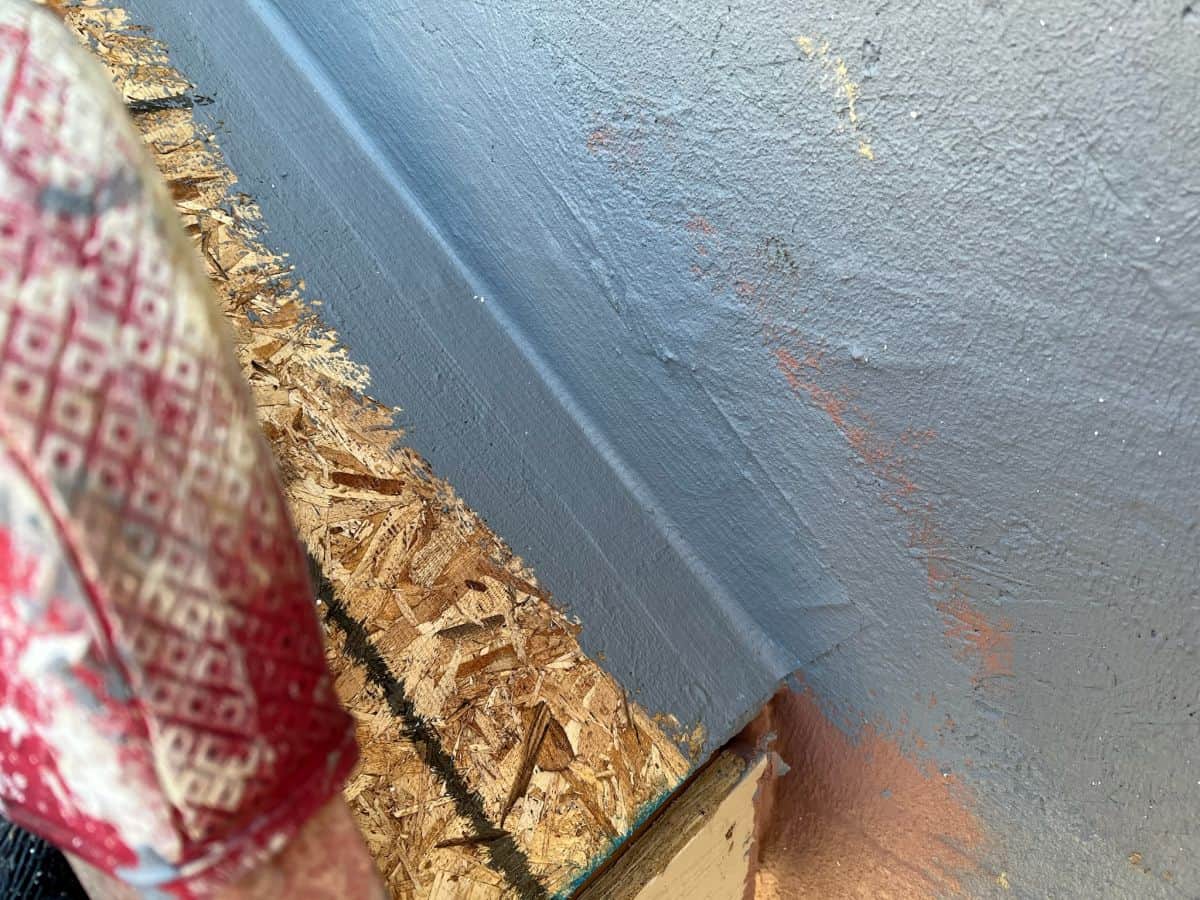
- Repair isolated areas. Repairs may include cracks, soft substrate sections, accent band reshaping, kickout flashing additions, or targeted window perimeter repairs. Our article on kickout flashing for EIFS walls explains why some of these corrections matter.
- Investigate elevated moisture levels. If readings are unusually high, the next step may involve limited demolition to confirm substrate condition and define the repair area accurately.
- Create a written repair scope. Materials, sequencing, and repair details are documented clearly. This is what helps make contractor bids more comparable and protects the building during the repair process.
- Coordinate with other trades. Roofers, window installers, gutter contractors, painters, and remodelers often need their work sequenced correctly around EIFS repairs.
- Plan phased work. Larger buildings, commercial properties, and HOA projects are often repaired in phases across multiple budget cycles.
The goal is a repair plan you can act on with confidence, not a report that sits in a drawer. Regular EIFS inspections, paired with timely repairs and maintenance, are one of the best ways to prevent larger repair costs later.
From Inspection to Repair: How the Process Works
Four steps from your first call to a finished wall you can stop worrying about.
For deeper reading on specific aspects of EIFS inspection, sealants, moisture, flashing, and repair planning, the resources below cover the topics property owners, buyers, and managers most often ask about.
Inspection Basics
- The Science Behind EIFS Inspections: What Inspectors Look For
- How to Read an EIFS Inspection Report: What Matters Most
- How Often Should EIFS Be Inspected in Indiana? A Spring-Focused Guide
- How to Prepare for an EIFS Inspection: A Checklist for Homeowners
Moisture Warning Signs
- If EIFS Feels Soft to the Touch, Your Stucco May Be Failing
- Risks of Buying a Home with Older Standard EIFS
- Thermal Imaging in EIFS Inspections
- Where Brick Meets EIFS: Spring Tuckpointing Issues and Leak Red Flags
Water Entry Details
- EIFS and Gutters: How Gutter Overflow Causes Hidden Wall Damage
- Kickout Flashing for EIFS: Stop Roof Runoff Leaks
- Replacing a Roof on an EIFS Home: 7 Mistakes That Lead to Hidden Leaks
- EIFS Penetrations Done Right: Vents, Hose Bibs, and Boxes
- EIFS Termination Details at Grade: Moisture-Safe Design
Next Steps
FAQs About EIFS Inspections
Do I need an EIFS inspection?
You likely need an EIFS inspection if you see staining below windows, cracks at window or door corners, soft spots when you press on the wall, bubbling or delamination in the finish coat, recurring interior leaks, or failed sealant joints. Inspections are also worth scheduling before a roof or window replacement, before buying or selling an EIFS-clad home, after a hail or wind storm, and on a regular maintenance cycle for HOA, condo, and commercial buildings.
What does the inspection include?
Depending on the building and visible conditions, an EIFS inspection may include a visual walk-around, moisture meter readings, probe moisture testing at suspect locations, infrared thermal imaging, sealant joint evaluation, substrate condition review, and photo documentation. The inspection typically ends with repair scope recommendations that explain what to fix, in what order, and with what general approach. Not every inspection needs every method. The scope depends on building size, access, and the reason for the visit.
What areas are checked?
An EIFS inspection focuses on the details that fail first: window and door perimeters, sealant joints, kickout flashing, roof-wall intersections, parapets on commercial buildings, gutter performance, lower terminations at grade, and penetrations such as vents, hose bibs, light fixtures, railings, and signs. The walk also covers cracks in the finish coat, soft substrate areas, accent band slope above windows, drainage conditions, and whether the wall is older barrier EIFS or a modern water-managed EIFS system.
What moisture signs matter?
Visible moisture signs include dark streaks below windows, staining at roof-wall intersections, soft or spongy areas when the wall is pressed, bubbling or delamination in the finish coat, paint bubbles or musty smells inside, and recurring leaks that have not been pinned down. On the readings side, elevated moisture meter values at suspect locations and temperature anomalies on thermal imaging both warrant a closer look. Readings should be interpreted with the wall assembly in mind, not in isolation.
What does the report include?
An EIFS inspection report typically includes annotated photos of each concern, findings organized by elevation or wall section, moisture readings with location notes, sealant joint condition, identification of the EIFS system type, and a written repair scope with priorities. The level of detail depends on the reason for the inspection. A pre-purchase report looks different from a reserve-planning report or a quick repair-focused walk-through. Indiana Wall Systems confirms the deliverable when the inspection is booked.
When should buyers, sellers, HOAs, and property managers call?
Buyers should call before closing on any home with EIFS, synthetic stucco, or stucco. Sellers should call before listing to document the wall system and address visible issues ahead of due diligence. HOA and condo boards should call when planning reserves, phased reseal projects, or shared-wall assessments. Property managers should call to fit scheduled inspections into a maintenance budget and surface repairs before tenants do. Commercial owners should call to match inspection scope to building size, occupancy, and risk profile.
What happens after the inspection?
After the inspection, possible outcomes include no major issue found, monitor and maintain, reseal aged sealant joints, repair isolated areas such as cracks or accent bands, investigate elevated moisture readings with limited demolition, build a written repair scope, coordinate sequencing with roofers or window installers, or plan phased work across budget cycles for larger buildings. The goal is a plan property owners can act on with confidence, not a report that sits in a drawer.
Schedule an EIFS Inspection in Central Indiana
Indiana Wall Systems inspects EIFS, synthetic stucco, and traditional stucco systems across Indianapolis, Carmel, Fishers, Zionsville, The Village of WestClay, and the rest of Central Indiana. If you are seeing moisture stains, cracks, soft spots, aging sealants, or planning roof or window work on an EIFS-clad building, an inspection helps identify the wall condition before small problems become larger repairs.
Call (765) 341-6020 or request an inspection below.