Updated 10/28/2026 – Commercial caulking helps seal joints around windows, doors, wall penetrations, and transitions between building materials. For an exterior joint that moves and faces weather, silicone, polyurethane, and hybrid sealants are common options. The right choice depends on the surfaces, expected movement, exposure, and manufacturer’s requirements.
A material name alone cannot tell you whether a product fits your building. A paintable caulk for interior trim, a facade weatherseal, and a firestop sealant have different jobs. This guide explains the main choices and what building owners and property managers should check before approving replacement work.
Caulk, Sealant, And Elastomeric: What The Labels Mean
People often use caulk and sealant interchangeably. In commercial exterior work, sealant usually refers to a flexible material selected for a joint’s movement and exposure.
Elastomeric describes a material’s ability to deform and recover. Silicone, polyurethane, and hybrid products can all be elastomeric. That word does not identify a separate chemistry or prove that a product has enough movement capacity for an expansion joint.
Likewise, latex and acrylic latex are overlapping product descriptions. A list that counts both as entirely separate choices can make sealant selection look simpler than it is. Compare the actual product data, approved uses, and limitations.
Commercial Caulking Types At A Glance
| Material Or Application | Where It May Fit | What To Verify |
|---|---|---|
| Silicone | Exterior weatherseals, window perimeters, and specified facade joints | Substrate adhesion, movement capacity, staining, and color; standard 100% silicone is generally not paintable |
| Polyurethane | Specified concrete, masonry, and other construction joints | Exposure, primer requirements, movement rating, and coating compatibility |
| Hybrid | Specified exterior joints where movement and finish requirements suit the product | Exact chemistry, approved substrates, paint compatibility, and cure conditions |
| Acrylic Latex | Paintable trim gaps and other applications allowed by the product | Exterior-use approval and movement limits; trim caulk is not an automatic expansion-joint sealant |
| Butyl | Certain lap joints, bedding details, and secondary glazing seals | Whether the specific detail permits it, including exposure and movement limits |
| Firestop Sealant | Penetrations or joints in fire-resistance-rated construction | The tested or listed system and its required materials and installation |
These are starting points for discussion. Products within the same family can have different uses and restrictions.
Silicone Sealants For Exterior Weathersealing
Building-grade silicone sealants are used for a range of facade weatherseals, including specified window perimeters, masonry joints, and curtain-wall connections. Products designed for high movement can remain flexible as adjacent building materials expand and contract.
Choose the silicone for the actual surfaces and joint. A product intended for one glazing or weathersealing detail is not automatically suitable for another. Natural stone may require staining checks, and some surfaces or conditions require primer or adhesion testing.
Standard 100% silicone is generally not paintable. Select an appropriate color and confirm compatibility with nearby finishes before installation. If repainting is part of the project, settle that detail before choosing the sealant.
Polyurethane Sealants For Construction Joints
Polyurethane construction sealants are available for joints in concrete, masonry, and other building materials. Some products accept compatible coatings after the required cure period, which can be useful where the joint needs to coordinate with a painted surface.
The product’s movement capability, exposure limits, and installation instructions still govern. A sealant suitable for a vertical wall joint may differ from one intended for a horizontal joint exposed to traffic or standing water.
Check the approved substrate preparation and primer requirements. The word polyurethane alone does not establish that a product will bond to an existing coating or EIFS detail.
Hybrid Sealants For Specified Exterior Details
Hybrid is a broad label for products made with modified polymer technologies. Some are formulated for exterior movement joints and offer paintability or adhesion characteristics that may fit a particular repair.
Compare the specific product rather than assuming that every hybrid combines the strongest qualities of every other sealant. Confirm its movement rating, approved surfaces, tooling requirements, and cure conditions. If the joint will be painted, check the sealant and coating manufacturers’ compatibility guidance.
Acrylic Latex Caulk For Paintable Gaps
Acrylic latex caulks are familiar choices for paintable gaps around trim and other finish work. Some products are approved for exterior use, but that approval does not mean they suit every exposed commercial joint.
Review the permitted joint size, movement, water exposure, and application conditions. A small trim gap has different demands from an expansion joint between large wall sections. An interior paint-preparation product should not be selected for a moving exterior joint simply because its color or cleanup method is convenient.
Butyl Sealants For Particular Bedding And Lap Joints
Butyl products have uses in certain metal lap joints, threshold bedding, and secondary glazing seals. They are not limited to windows, and their suitability depends on the assembly and the particular product.
For a proposed exposed facade joint, ask whether the manufacturer permits that use and whether the movement and exposure limits fit. A material that works inside a specified lap detail may be unsuitable as the visible replacement bead around another part of the building.
Firestop, Epoxy, And Roofing Products Need Separate Decisions
Firestop sealants serve a different purpose from ordinary exterior weathersealing. At a penetration or joint in fire-resistance-rated construction, the firestop material must fit the applicable tested or listed system. The wall or floor construction, opening, penetrating item, backing, and sealant installation all matter. A tube described as fire resistant cannot by itself establish the rating of the completed assembly. UL Solutions explains how firestop products and systems relate to rated construction.
Epoxy repair and anchoring products also belong to a separate selection process. An epoxy supplied in a cartridge may be intended for bonding or concrete crack repair. Its packaging does not make it interchangeable with a flexible weatherseal. Determine whether the work calls for a movement joint, a concrete repair, or a designed anchoring application before selecting the material.
Roofing sealants, including products described as bituminous, must be checked against the roof assembly and repair detail. Do not extend a general claim about roof waterproofing or UV resistance to every product carrying that label. Coordinate roof-to-wall work with the relevant roofing and wall-system requirements.
How To Choose A Sealant For A Commercial Building
Before approving a product substitution or replacement scope, ask the contractor to identify:
- The materials on both sides of the joint, including coatings and existing sealant residue.
- The expected movement and whether the product’s rated capability fits the joint design.
- Exposure to sunlight, rain, standing water, traffic, or cleaning chemicals.
- Whether the joint is vertical, sloped, or horizontal, and which product consistency is appropriate.
- Primer, compatibility, staining, and field-adhesion checks required for the actual surfaces.
- Application temperature, moisture limits, cure requirements, and any painting schedule.
For example, a storefront perimeter and an interior trim gap may both be called caulking work on an estimate. They should still have distinct material and installation requirements. Ask for the proposed product names and data sheets rather than accepting one general material description for every location.
Why Joint Preparation And Backer Rod Matter
Replacing failed sealant involves more than covering an open gap. The joint needs suitable bond surfaces, the specified dimensions, and a sealant bead that can move as intended.
Backer rod is a backing material placed behind the sealant. Where specified, it helps control depth, supports tooling, and prevents the sealant from bonding to the bottom of the joint. Bonding to both sides and the bottom is called three-sided adhesion, which can restrict movement and contribute to failure. Shallow joints may require an appropriate bond-breaker tape instead, according to the detail.
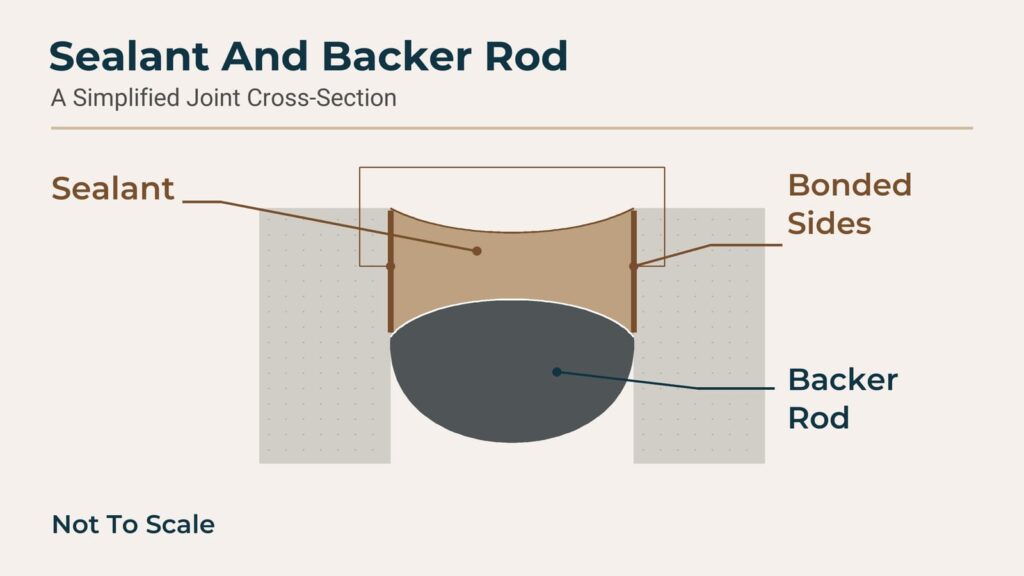

There is no single bead depth, backing product, or width-to-depth ratio for every commercial joint. Follow the selected sealant’s requirements and the project detail. Cleaning, removal of failed material, primer when required, and proper tooling remain part of the work. Tremco’s backing-material guide explains the role of backer rod and bond breakers.
EIFS And Stucco Joints Require Compatible Details
On EIFS buildings, the sealant needs to work with the wall system and the material on the other side of the joint. The receiving surface matters as much as the product family. A bead applied to an unsuitable finish or damaged joint edge can fail even when the sealant itself is appropriate.
Use the wall-system manufacturer’s joint details and the sealant manufacturer’s recommendations together. For example, Dryvit’s expansion-joint guidance identifies particular sealant and primer combinations and preparation requirements. Those instructions apply to the identified system and detail, not automatically to every EIFS wall.
If a joint has failed repeatedly, evaluate its dimensions, bond surfaces, nearby flashing, and surrounding wall condition. Where deteriorated EIFS is part of the problem, the scope may also require EIFS repair.
When A New Bead Of Caulk May Not Be Enough
Separation along a joint edge, splits through the bead, missing material, or repeated failure deserve evaluation. Recurring interior leaks, persistent staining, or soft adjacent wall material can also indicate a problem beyond the visible joint.
These observations do not establish the full extent or source of damage. Water may enter at a different detail from where it becomes visible. Sealant replacement cannot correct faulty flashing, blocked drainage, or damaged material behind the cladding by itself.
Ask whether the proposal covers isolated joint replacement or also addresses related wall repairs. Access equipment, failed-material removal, joint preparation, repair extent, and occupied-building requirements can all affect the scope and cost. A useful estimate explains what is included and what additional findings could change the work.
Planning Commercial Caulking Repairs In Central Indiana
Indiana Wall Systems provides exterior caulking and sealant repair for homes and commercial properties in Indianapolis and Central Indiana. The repair recommendation should reflect the existing wall, joint condition, and related details.
If your building has cracked or separated exterior joints, request a caulking repair evaluation. Include photos of the affected area, its location on the building, and whether you have noticed interior moisture or previous repair failures. That information helps explain the concern before the repair scope is developed.