EIFS Repair Specialists in Greenwood, Indiana
Local EIFS Project Photos and Exterior Repair Guidance
Grace Assembly of God EIFS Restoration in Greenwood
Before, During and After Photos
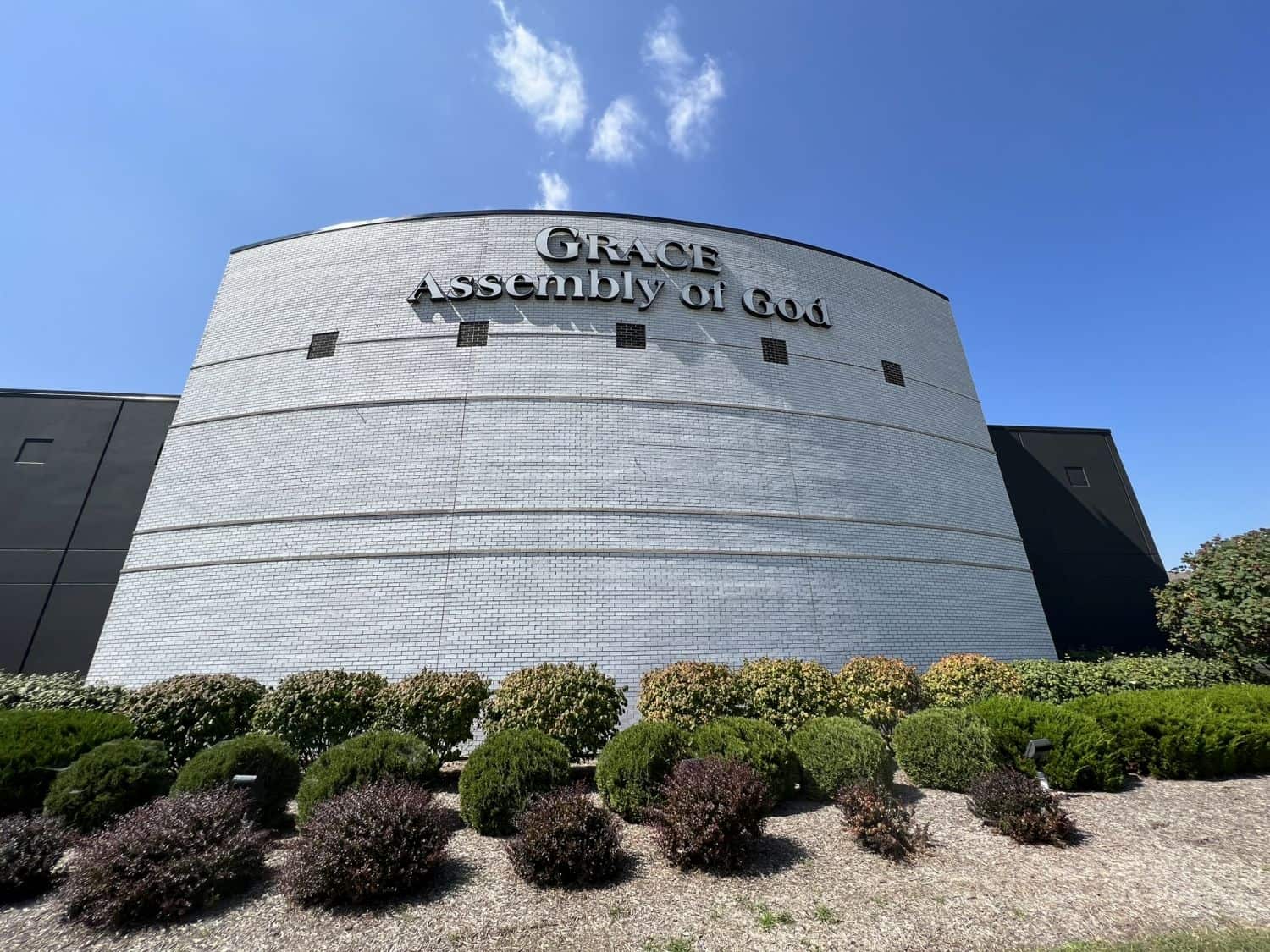
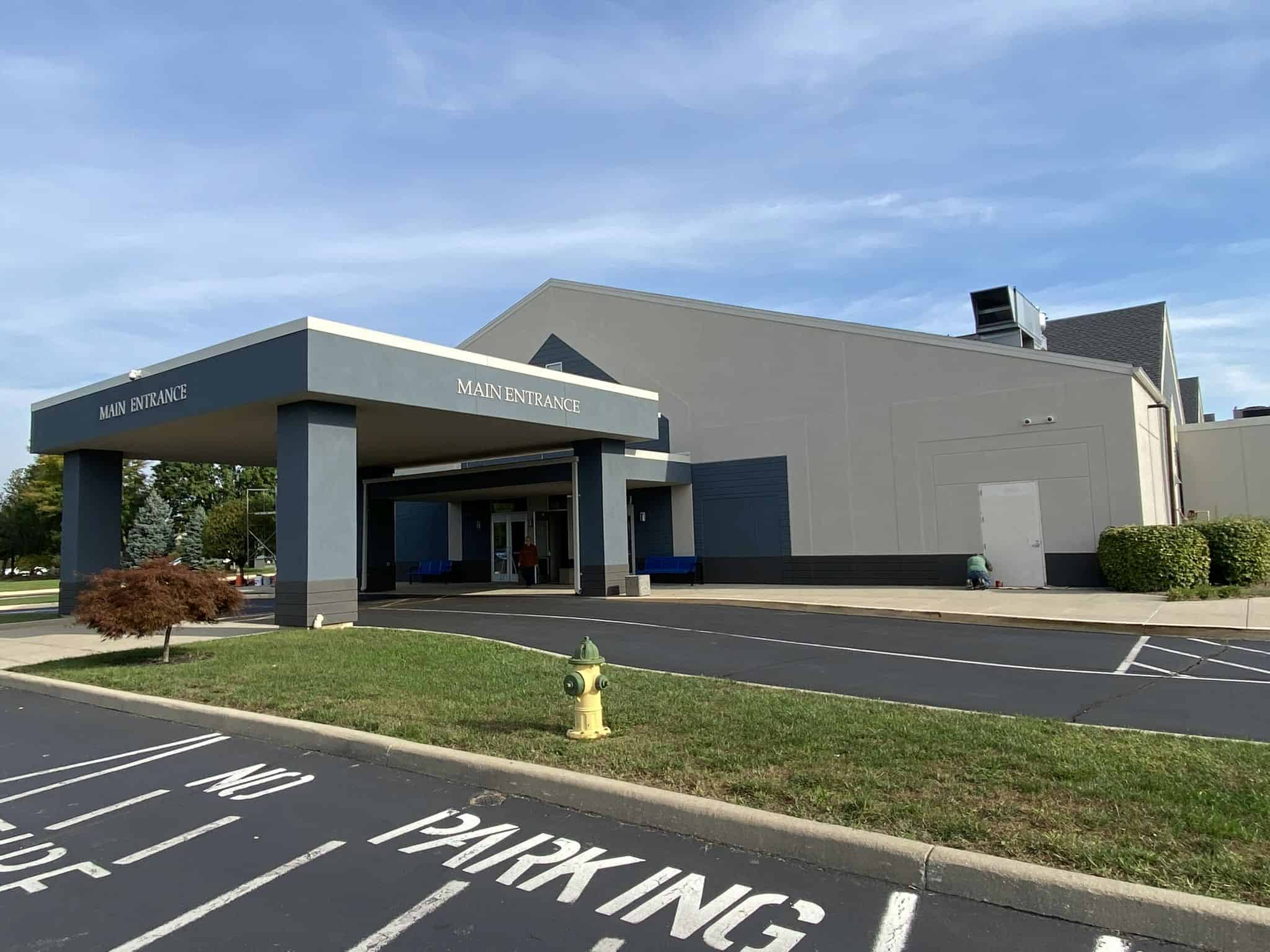
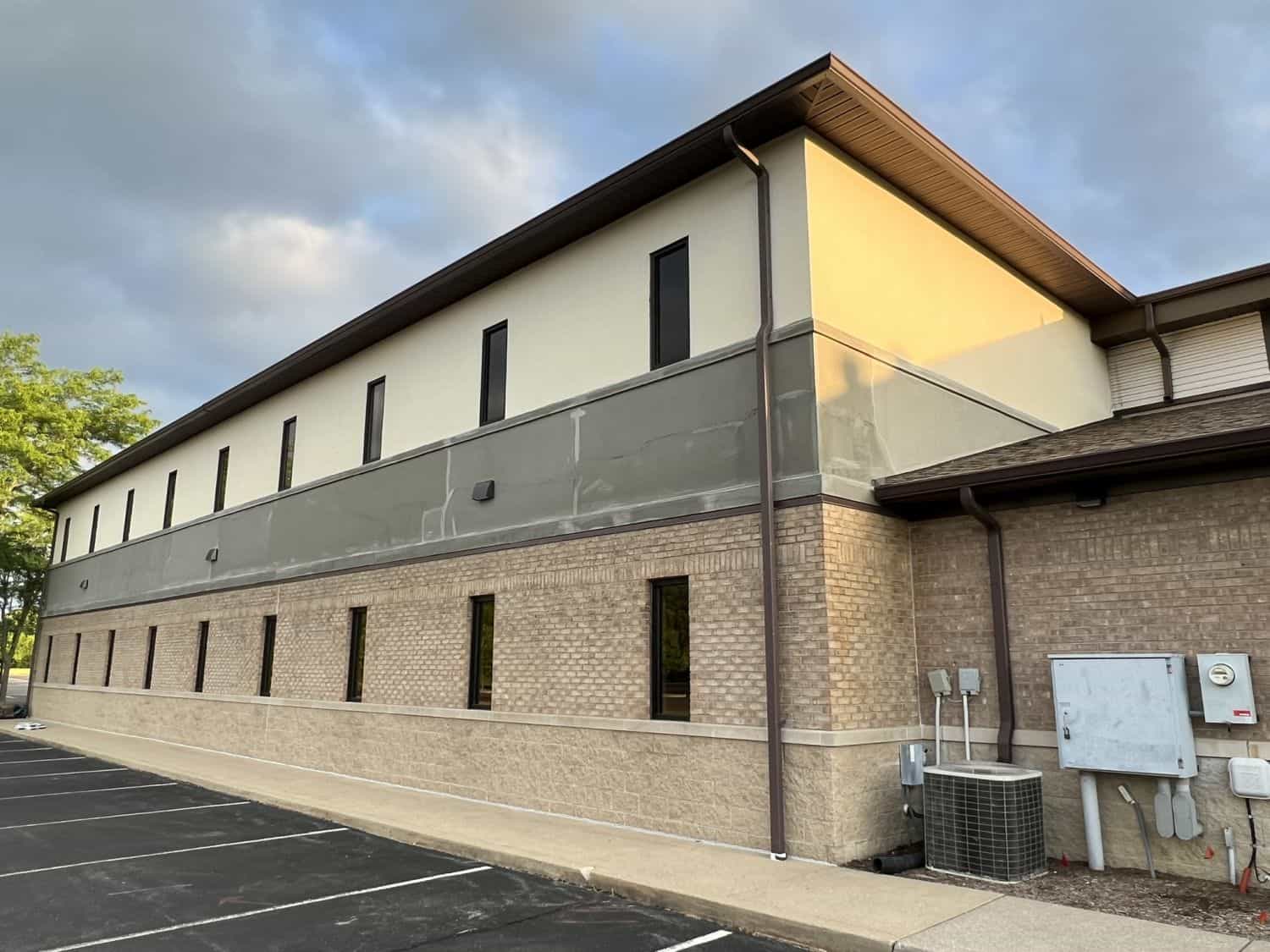
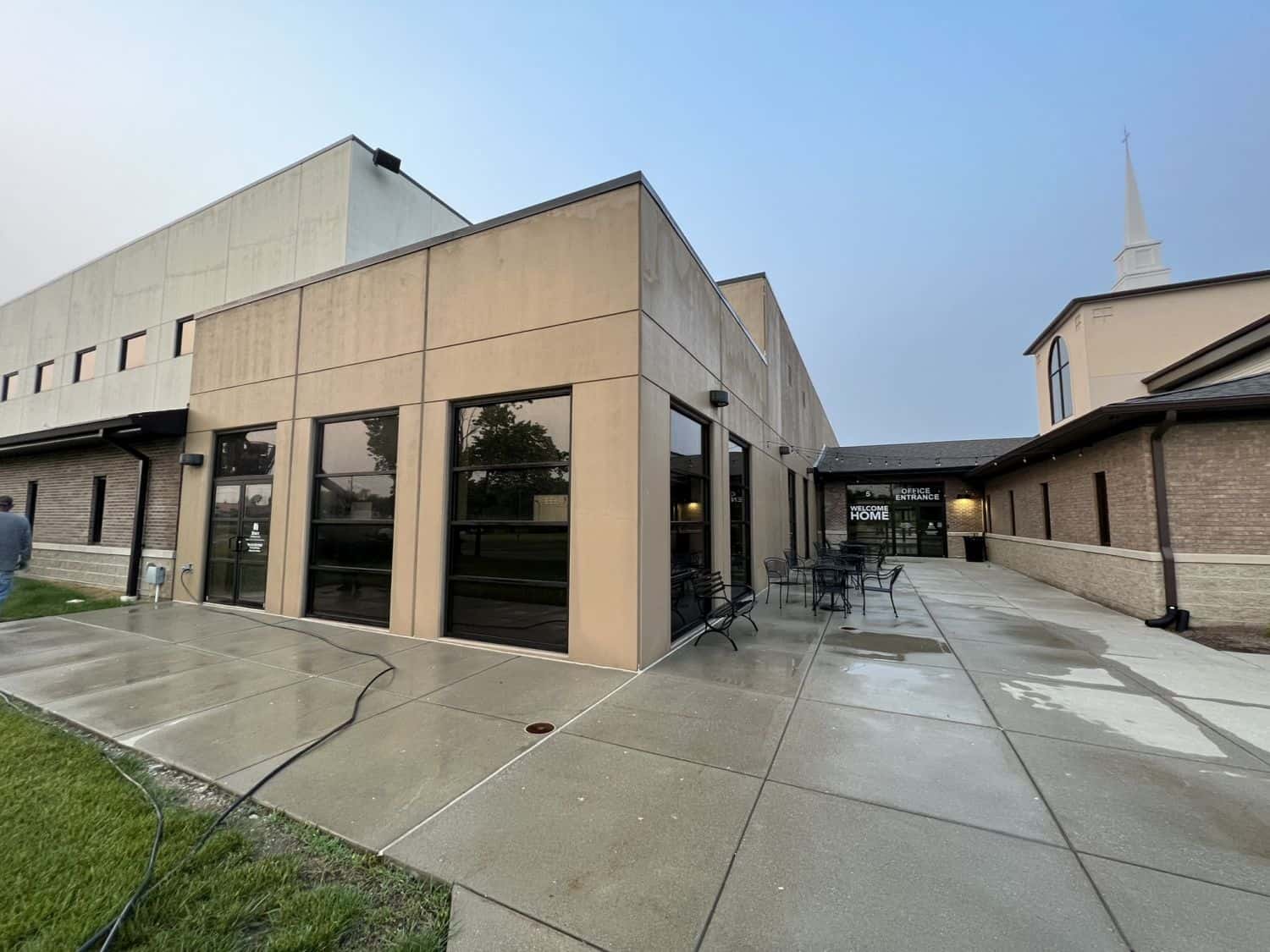
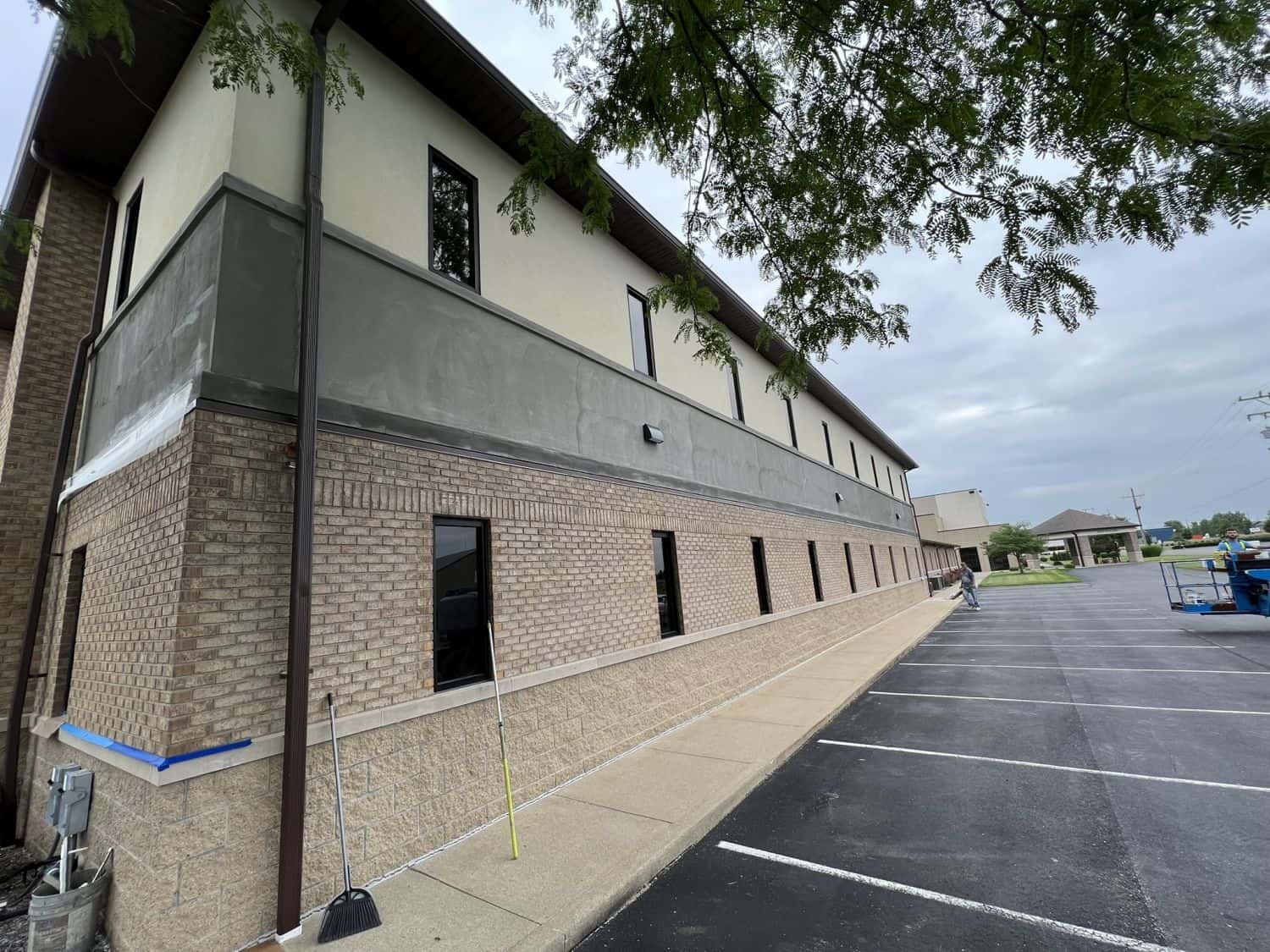
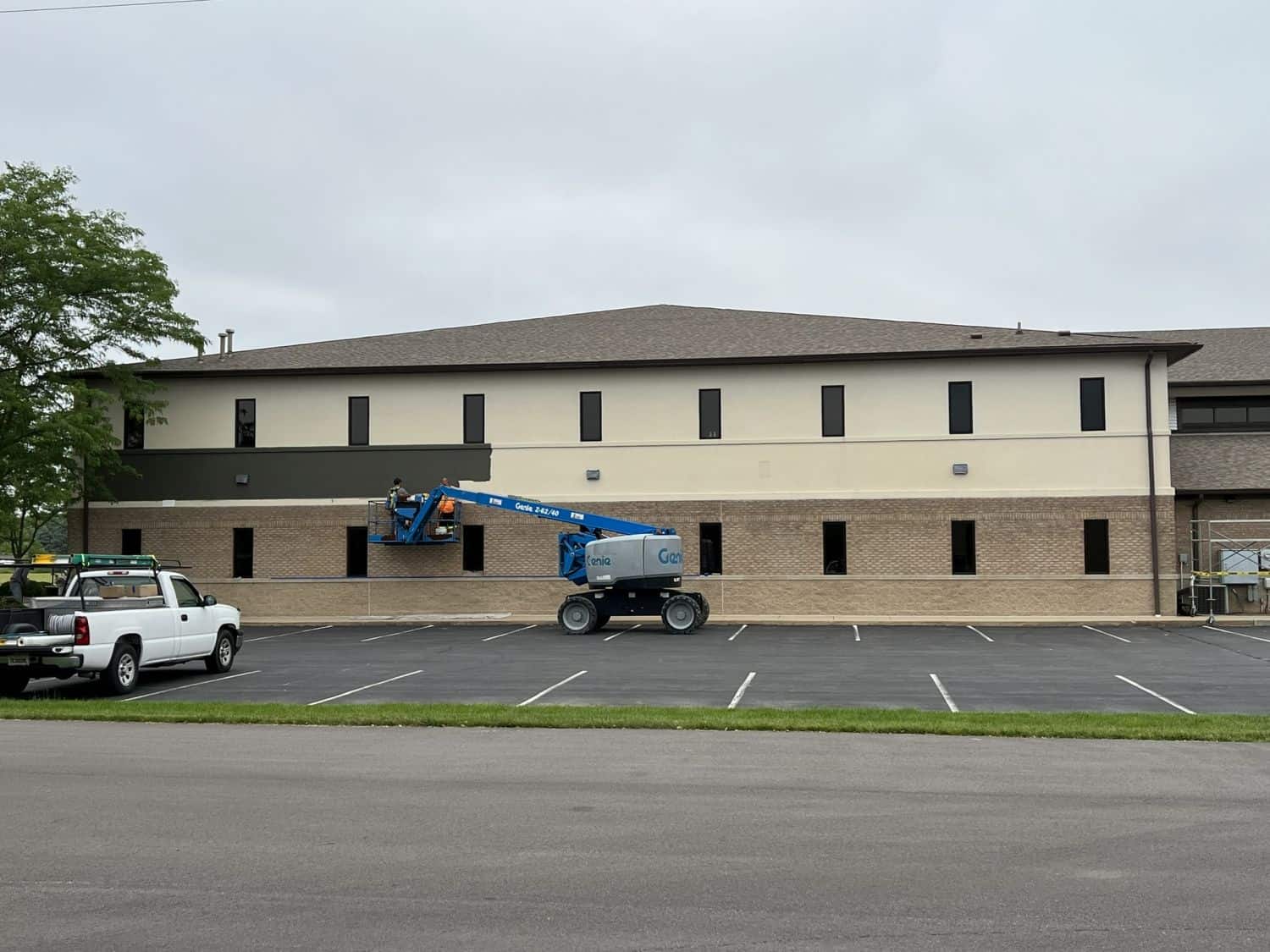
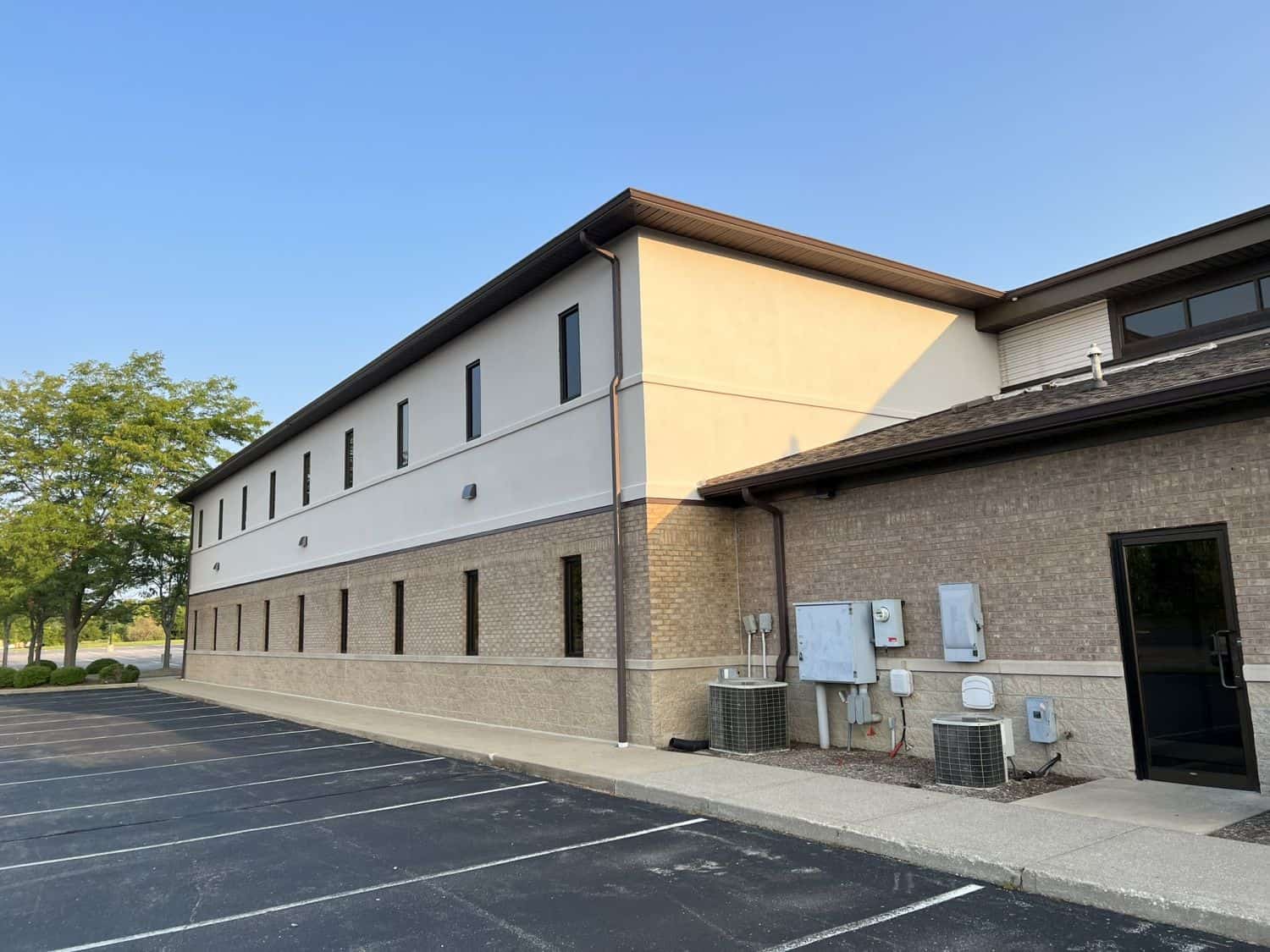
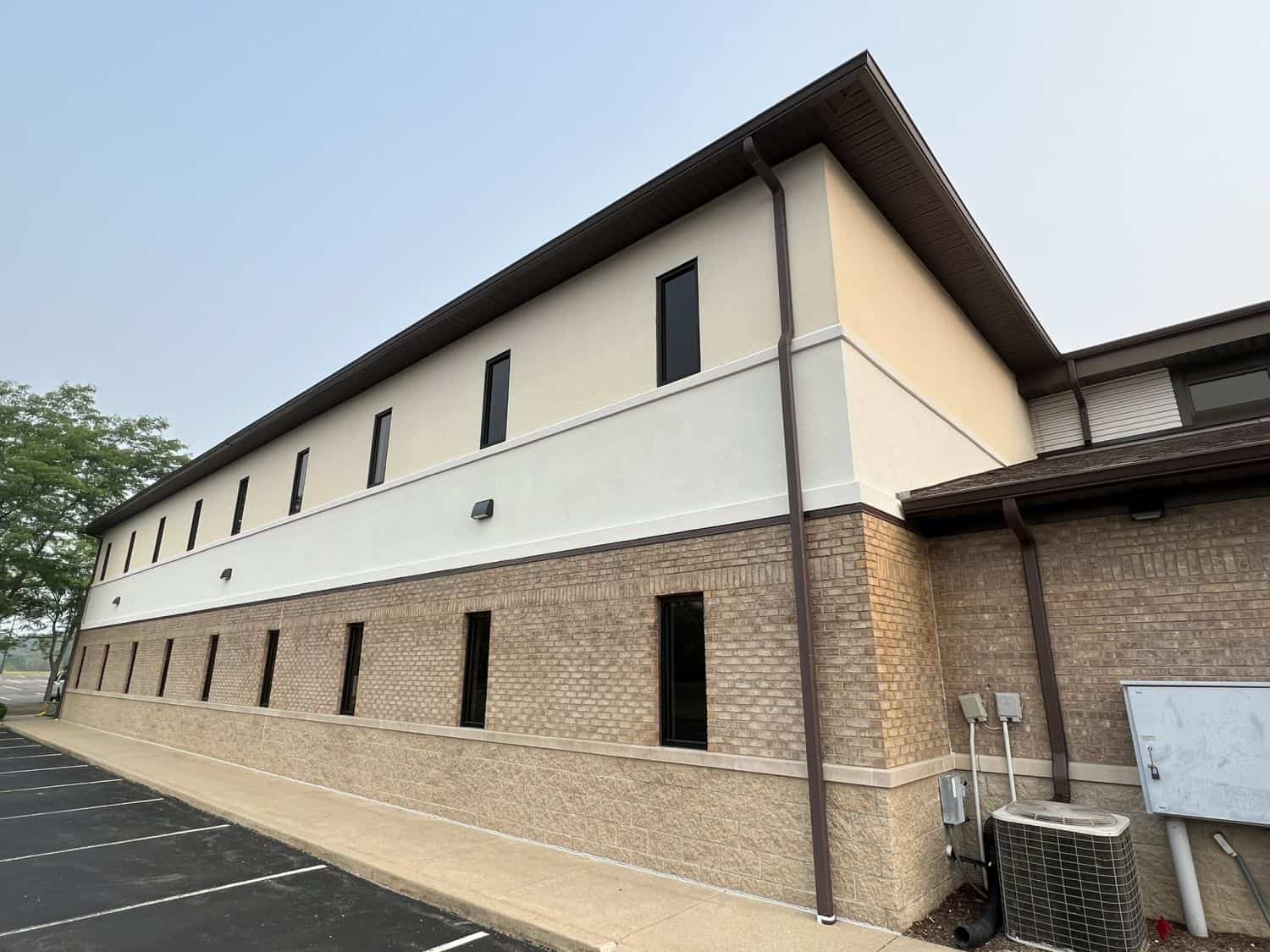
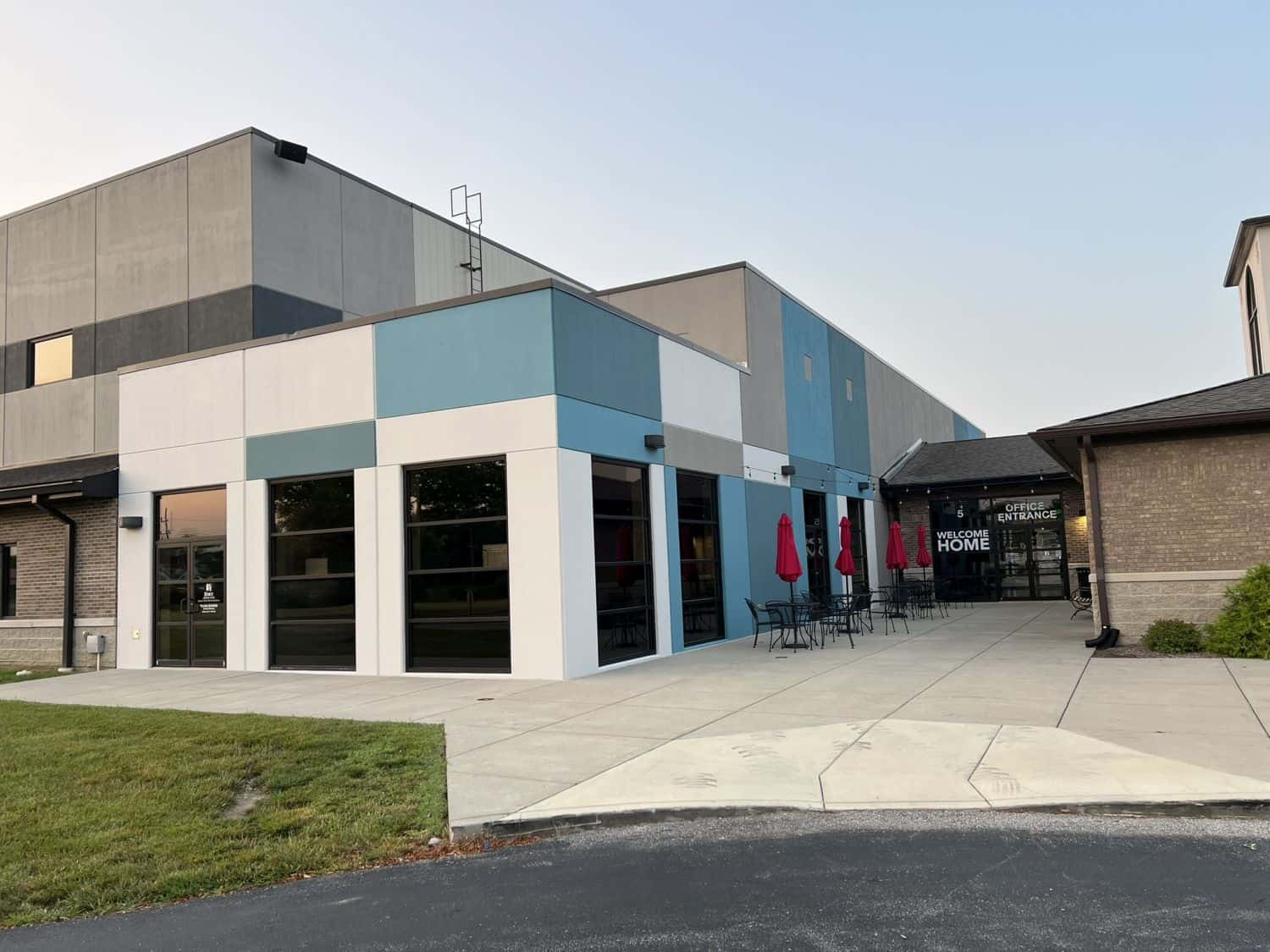
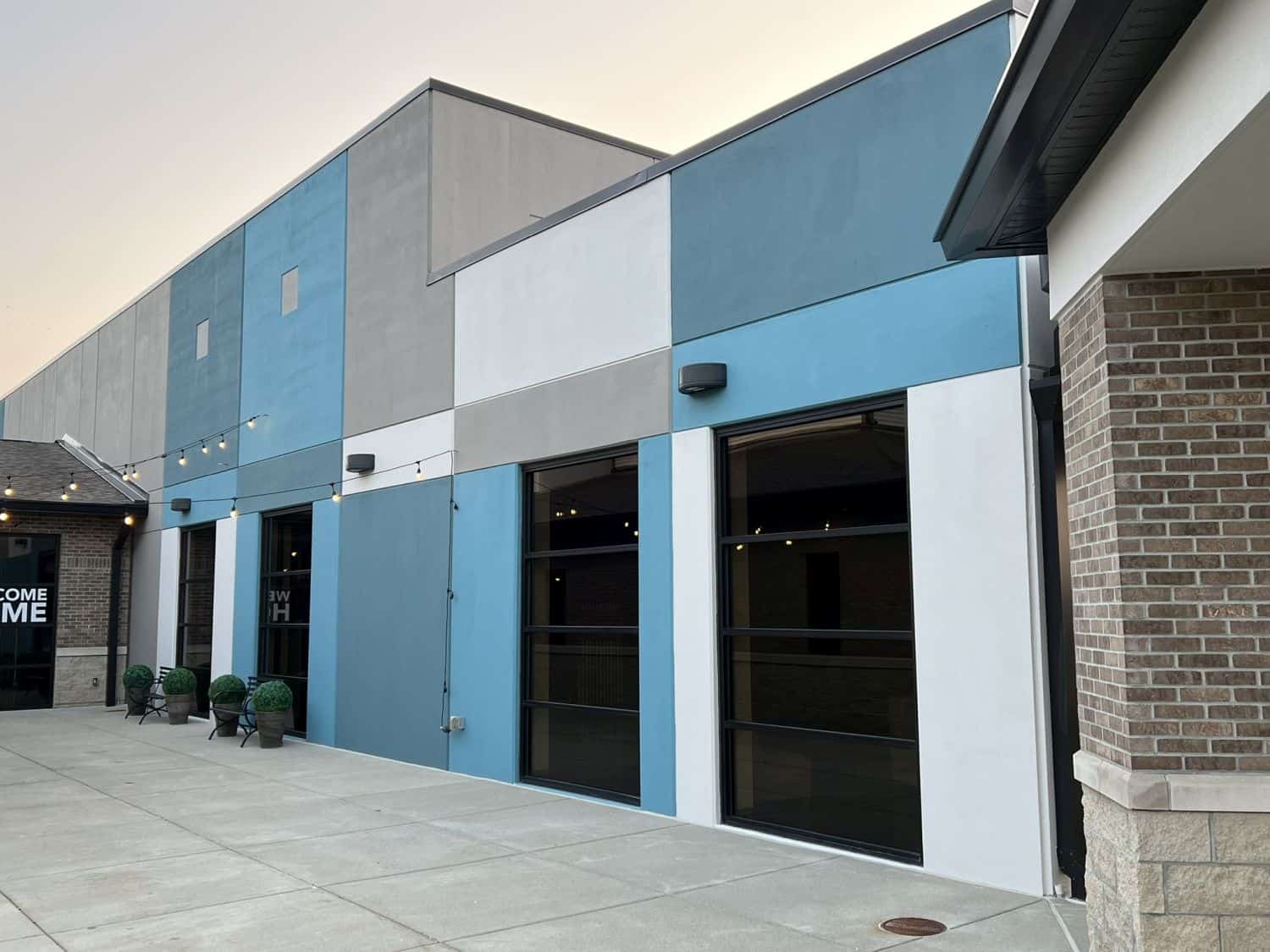
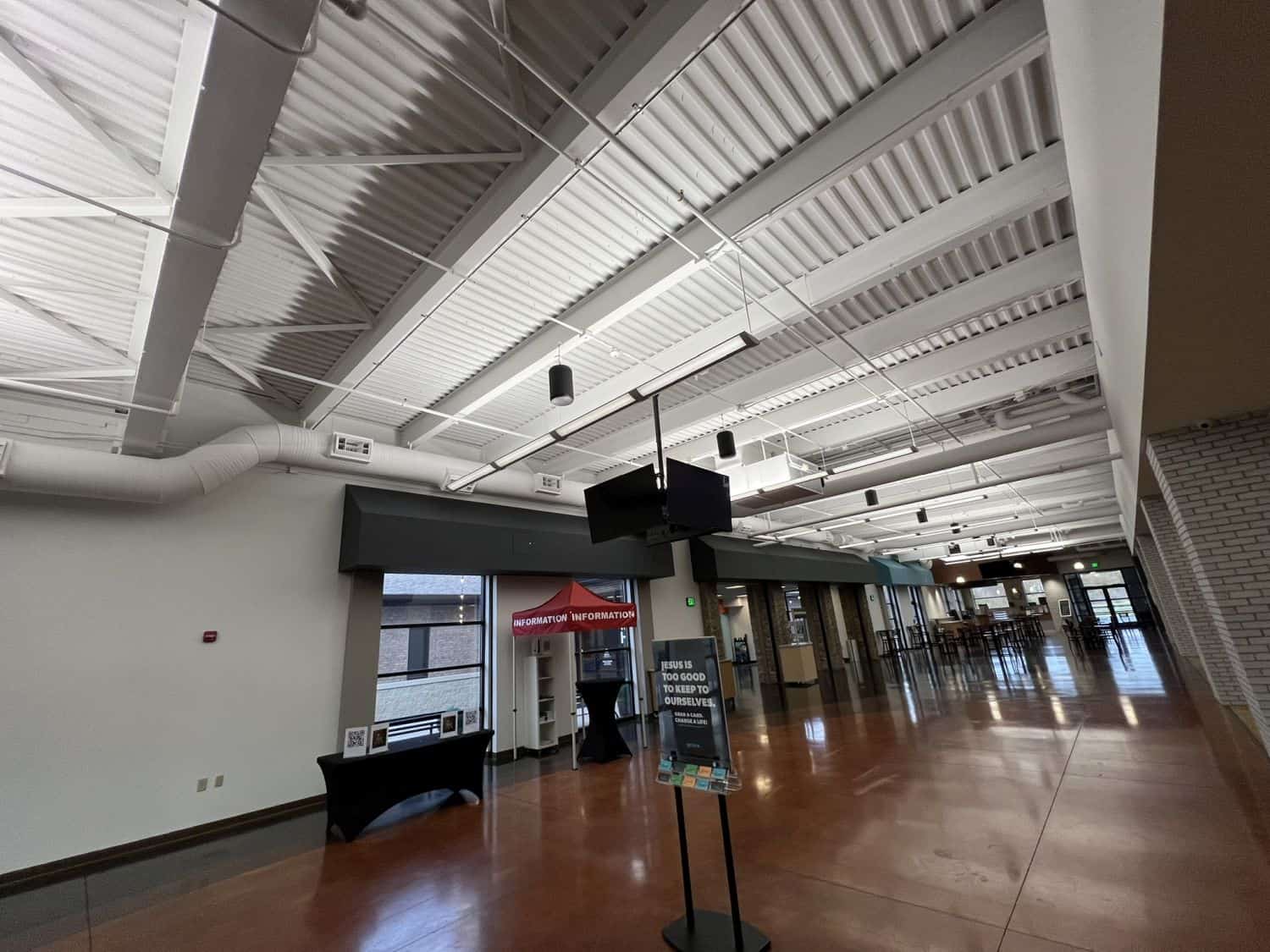
Greenwood Project: Grace Assembly of God
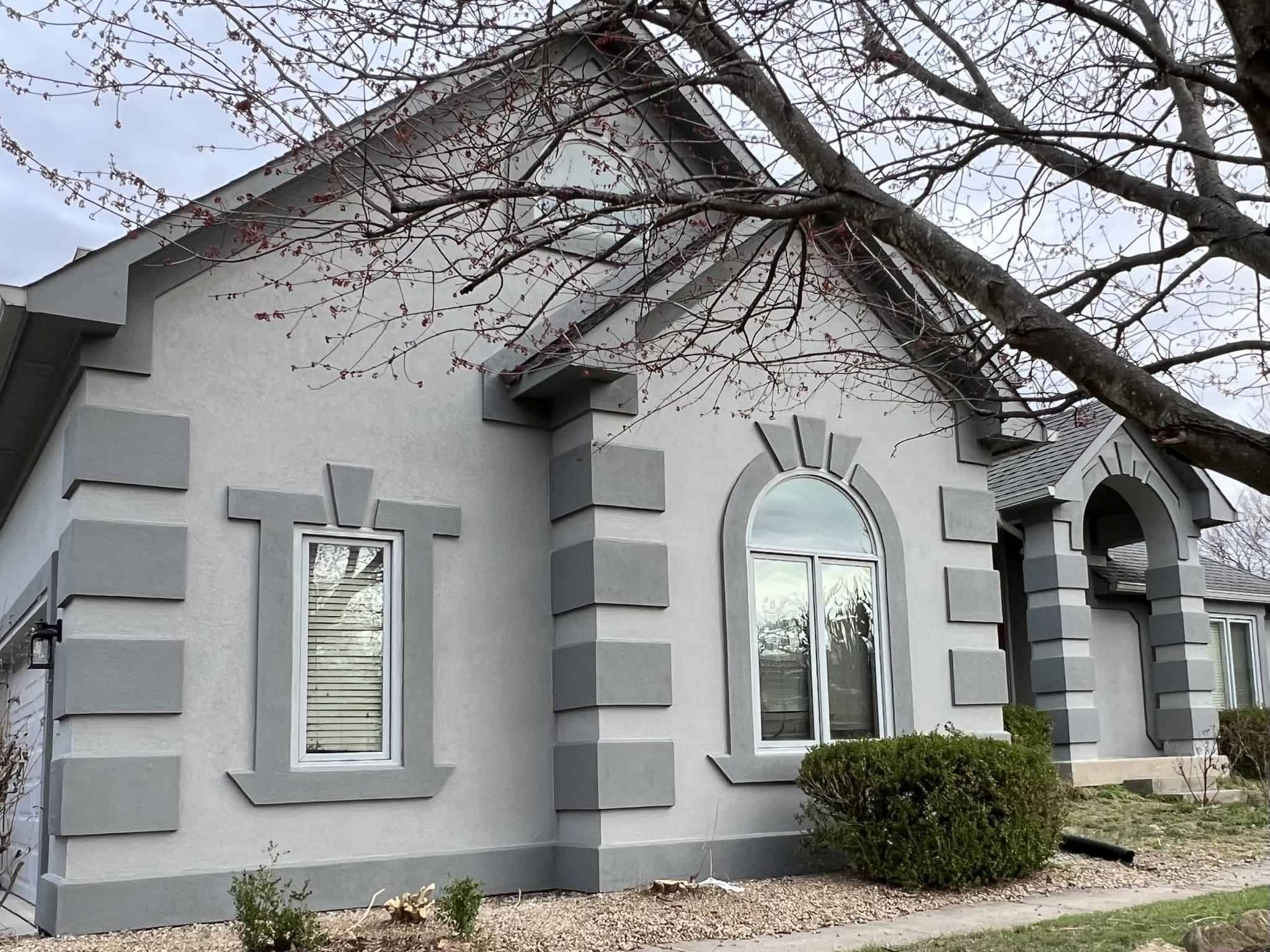
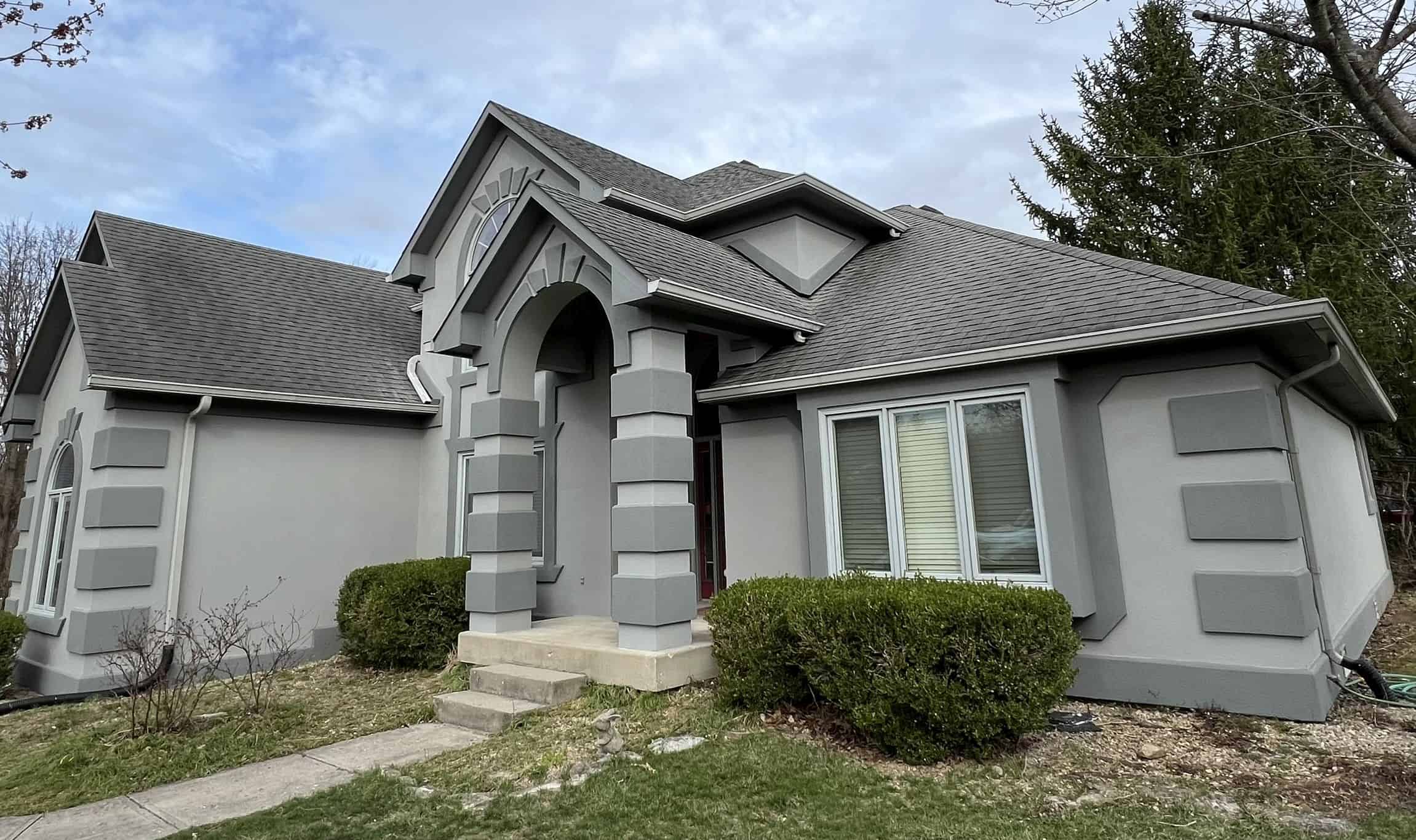
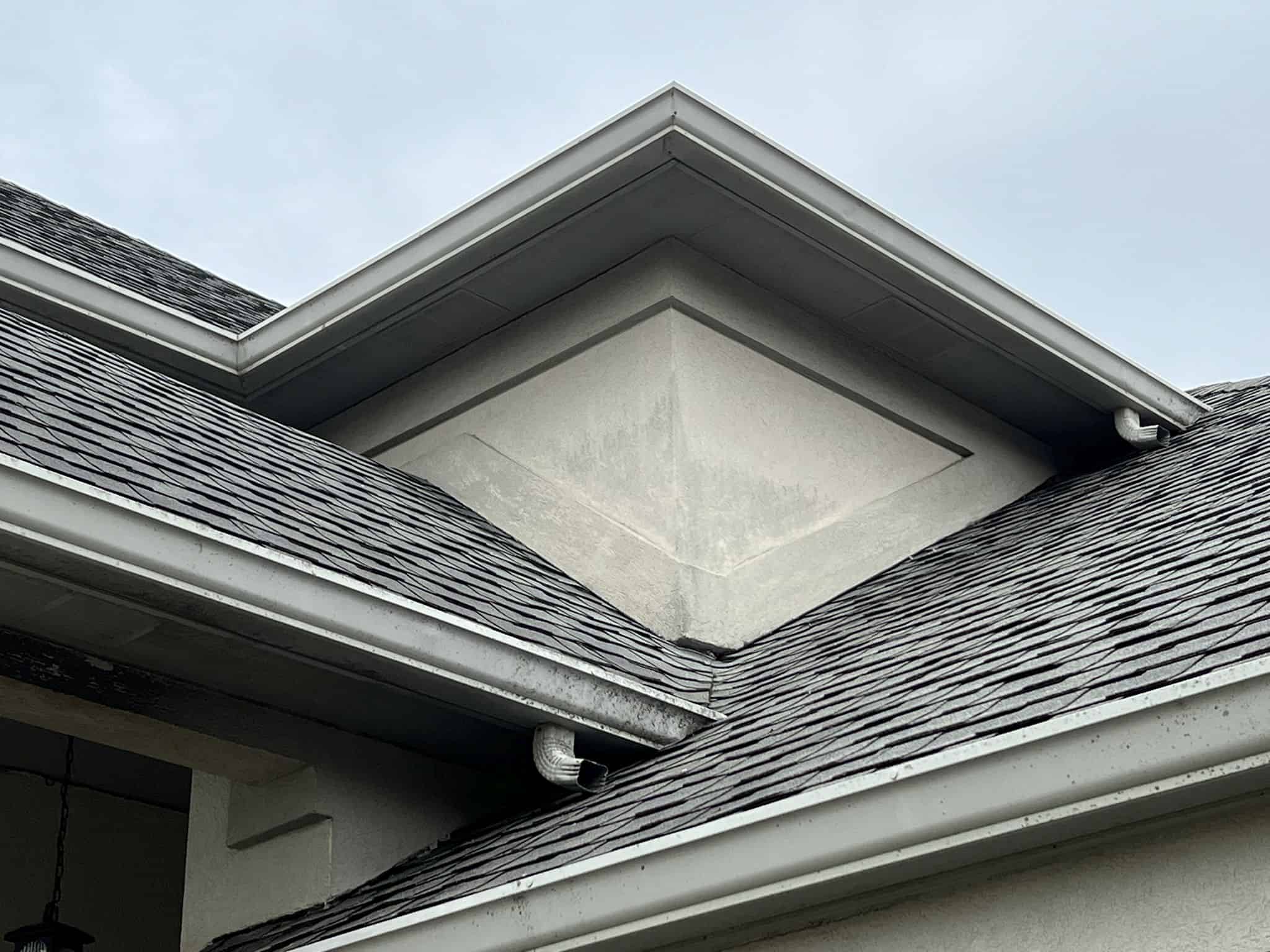
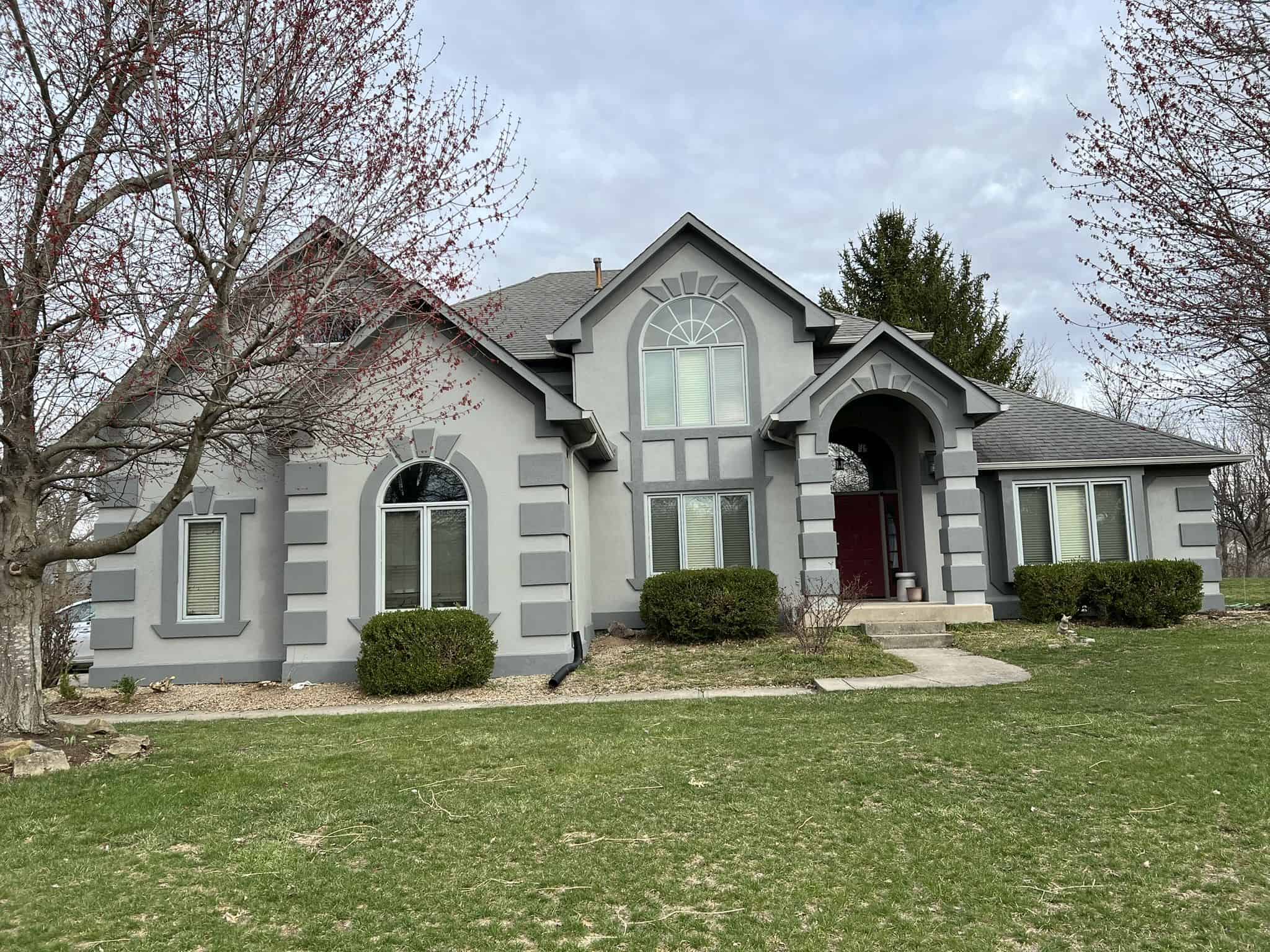
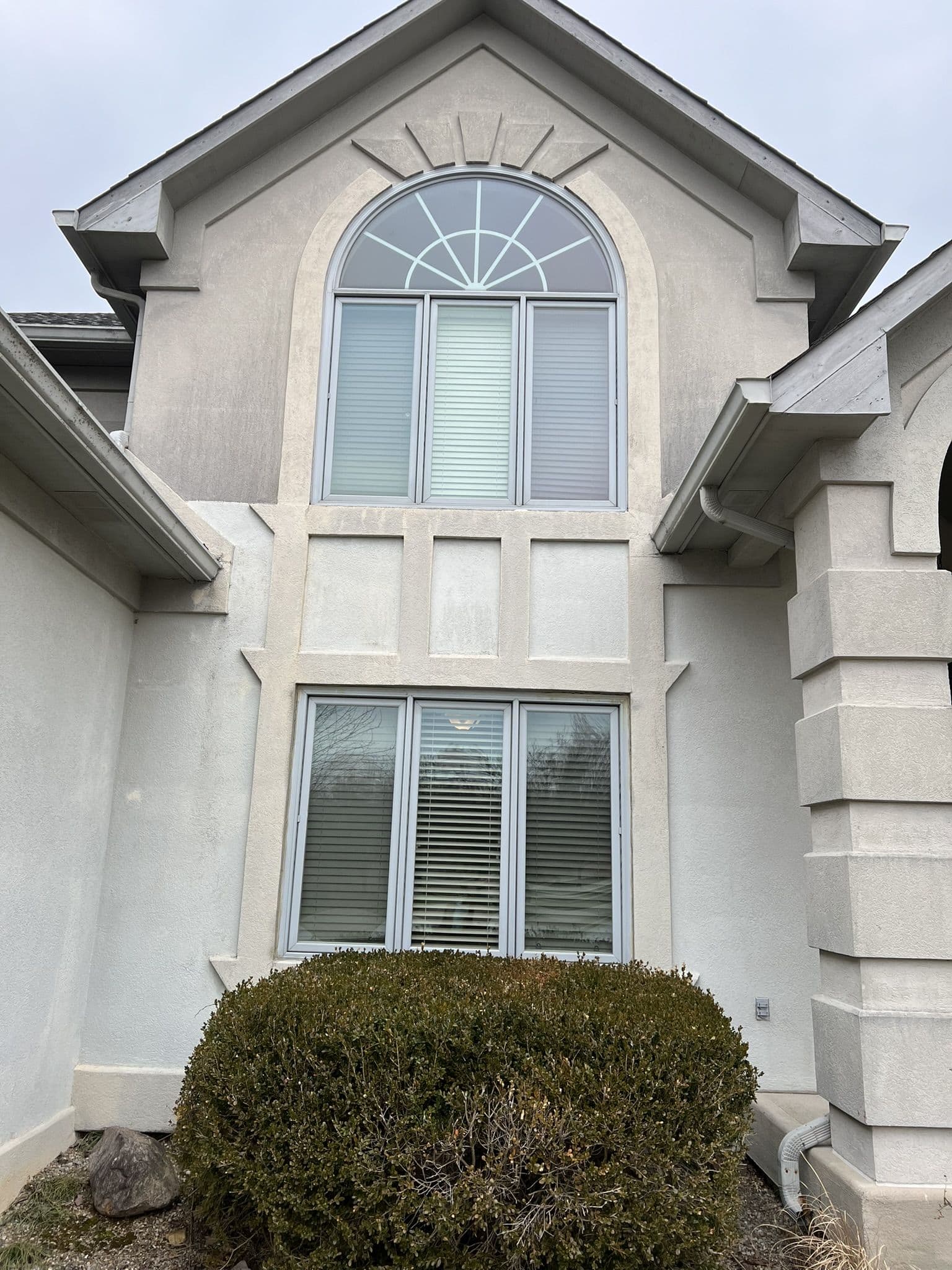
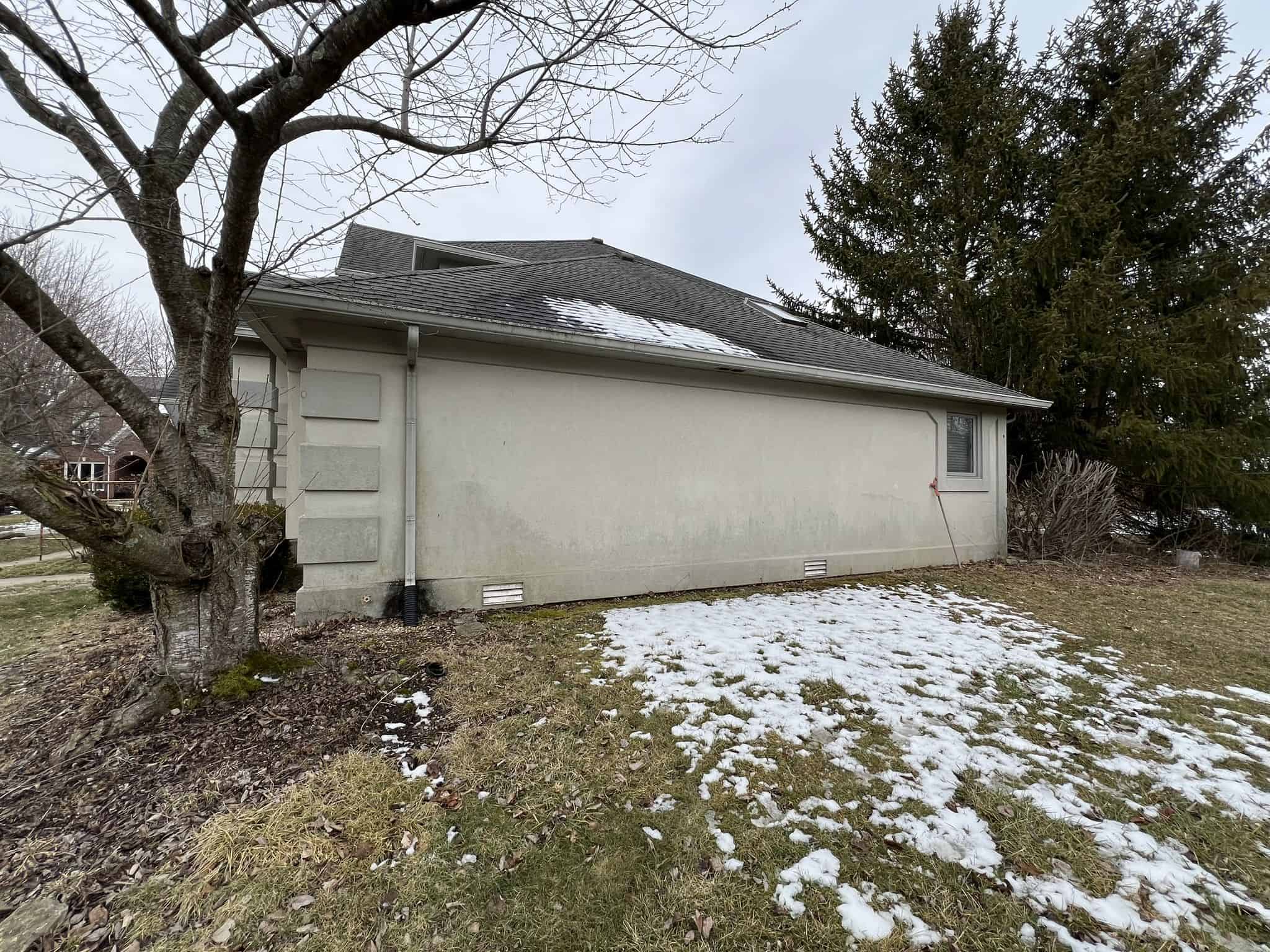
These project photographs show the exterior before work, wall-system repairs in progress, base-coat work, detail corrections, and the completed finish at Grace Assembly of God in Greenwood, Indiana
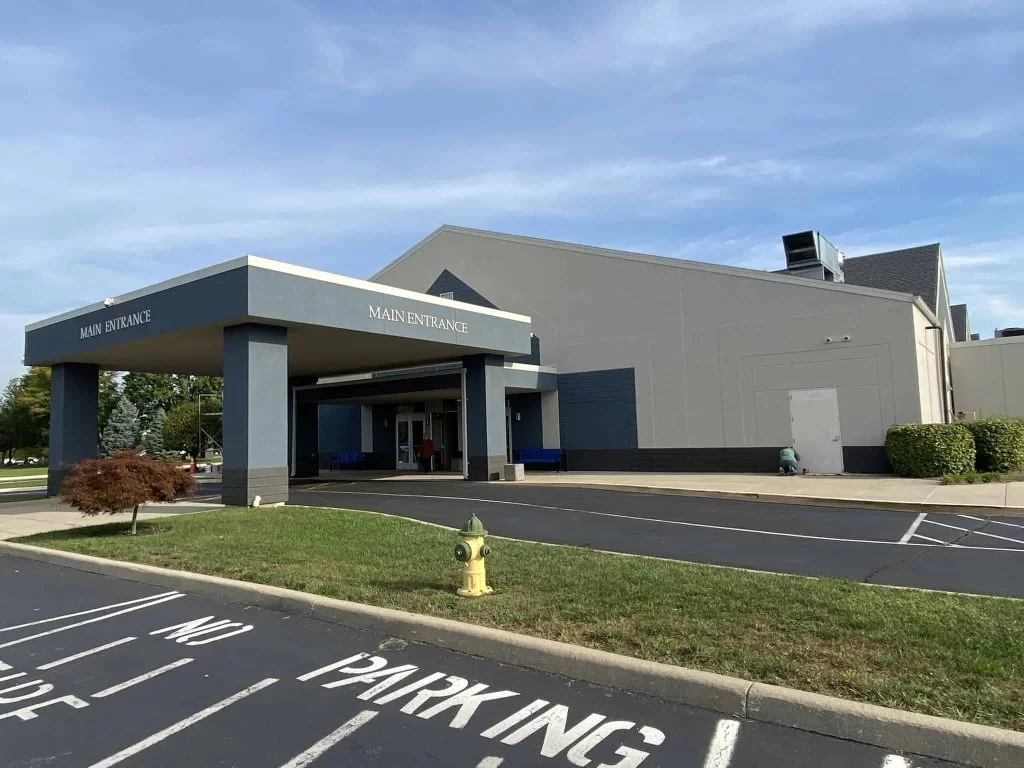
EIFS Repair for Churches and Commercial Properties
The same wall-system principles apply to residential and commercial EIFS, but access, repair sequencing, occupant needs, and the amount of exterior involved can change the project.
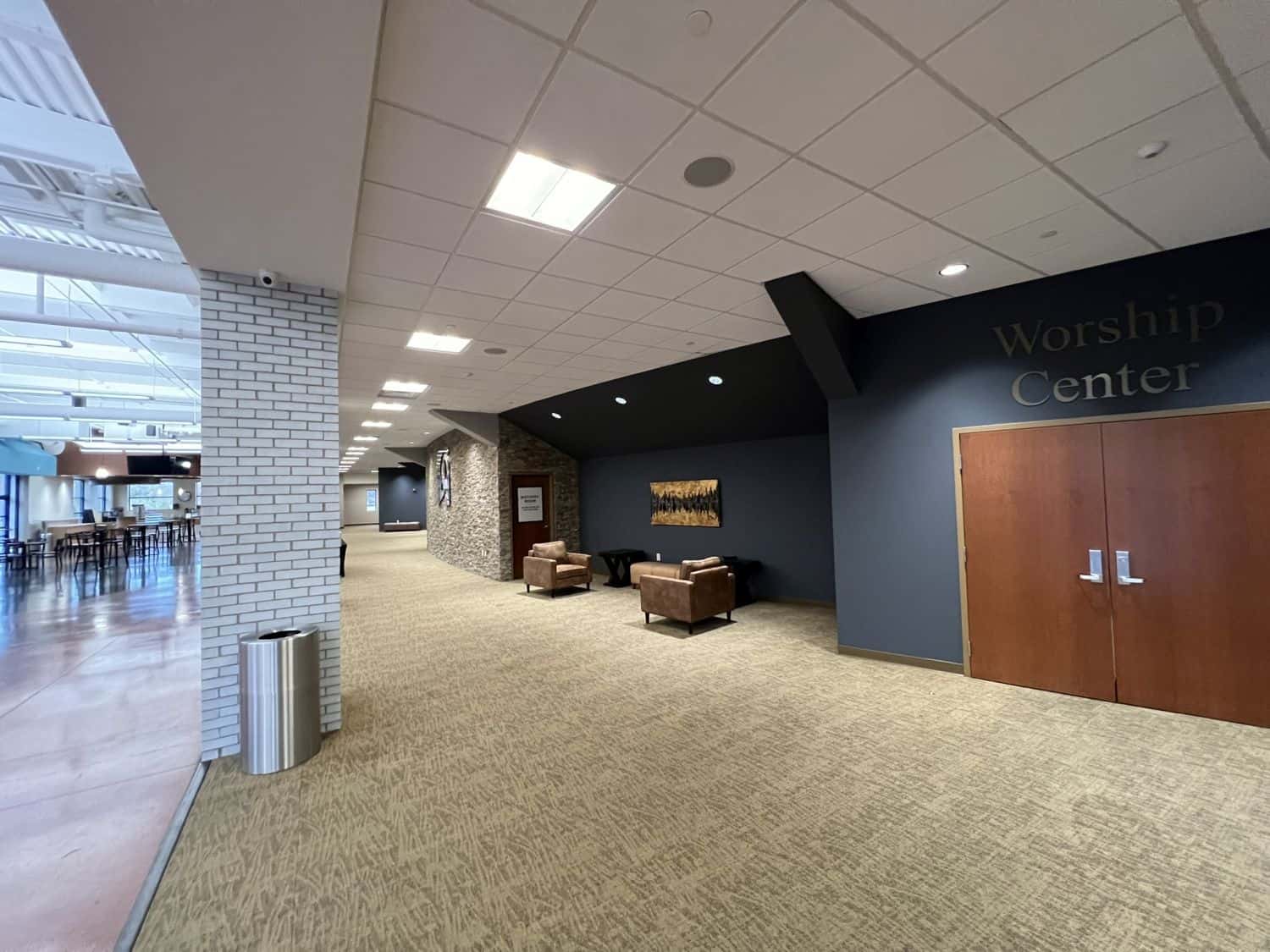
Church properties can include repeated windows, entrance canopies, roof-to-wall connections, brick and EIFS transitions, sealant joints, and exterior penetrations across several elevations. Interior work may also involve wall and ceiling repairs, patching, coatings, and finish restoration. The repair scope should account for the affected areas, building access, and how work will be sequenced around normal property use.
Indiana Wall Systems works with homeowners, commercial property contacts, and building managers. Property teams can also review our EIFS information for property managers.
Greenwood EIFS and Stucco Repair
Cracks, staining, open sealant joints, soft areas, and damaged finish coats can be signs that an EIFS or stucco wall needs more than a surface patch. The repair scope should follow the condition of the wall, the source of any moisture, and the way the surrounding materials were installed.
Indiana Wall Systems provides EIFS and stucco repair for homes, churches, commercial properties, and managed buildings in Greenwood and nearby Johnson County communities. We review the visible damage, transitions, penetrations, sealant joints, and surrounding wall area before recommending the work.
Call 765-341-6020 to discuss an EIFS or stucco condition in Greenwood, Indiana.
EIFS Problems We Evaluate in Greenwood
EIFS damage does not always begin in the middle of a wall. Problems often develop where the system meets another material or where water can enter around an opening.
Conditions worth checking include:
- cracks through the finish or base coat;
- staining below windows, roof edges, or wall penetrations;
- failed or separated sealant joints;
- soft, loose, or hollow-feeling wall areas;
- impact damage and exposed reinforcement mesh;
- bulging, blistering, or delaminated finishes;
- open joints where EIFS meets brick, stone, roofing, or other cladding;
- damaged termination details near the bottom of a wall;
- patches that have cracked again or do not match the surrounding system;
- coating failure or uneven weathering.
A visible crack can be limited to the finish, but it can also be connected to movement, an open joint, damaged substrate, or moisture behind the surface. That distinction should be made before the wall is patched and recoated.
Repair the Source Before Covering the Symptom
A finish repair may improve appearance without correcting the condition that caused the damage. If a joint remains open, a flashing detail directs water behind the wall, or damaged material is left beneath a patch, the problem can return.
An EIFS repair evaluation should consider:
- where the visible damage begins and ends;
- nearby windows, doors, roof lines, penetrations, and material transitions;
- the condition of sealant joints and backer material;
- whether the wall feels firm around the damaged area;
- signs of past or active moisture;
- the compatibility of the existing and proposed repair materials;
- how the repaired area will tie into sound base coat, mesh, and finish.
The goal is to define what failed and repair back to stable material. Learn more about Indiana Wall Systems’ EIFS repair services.
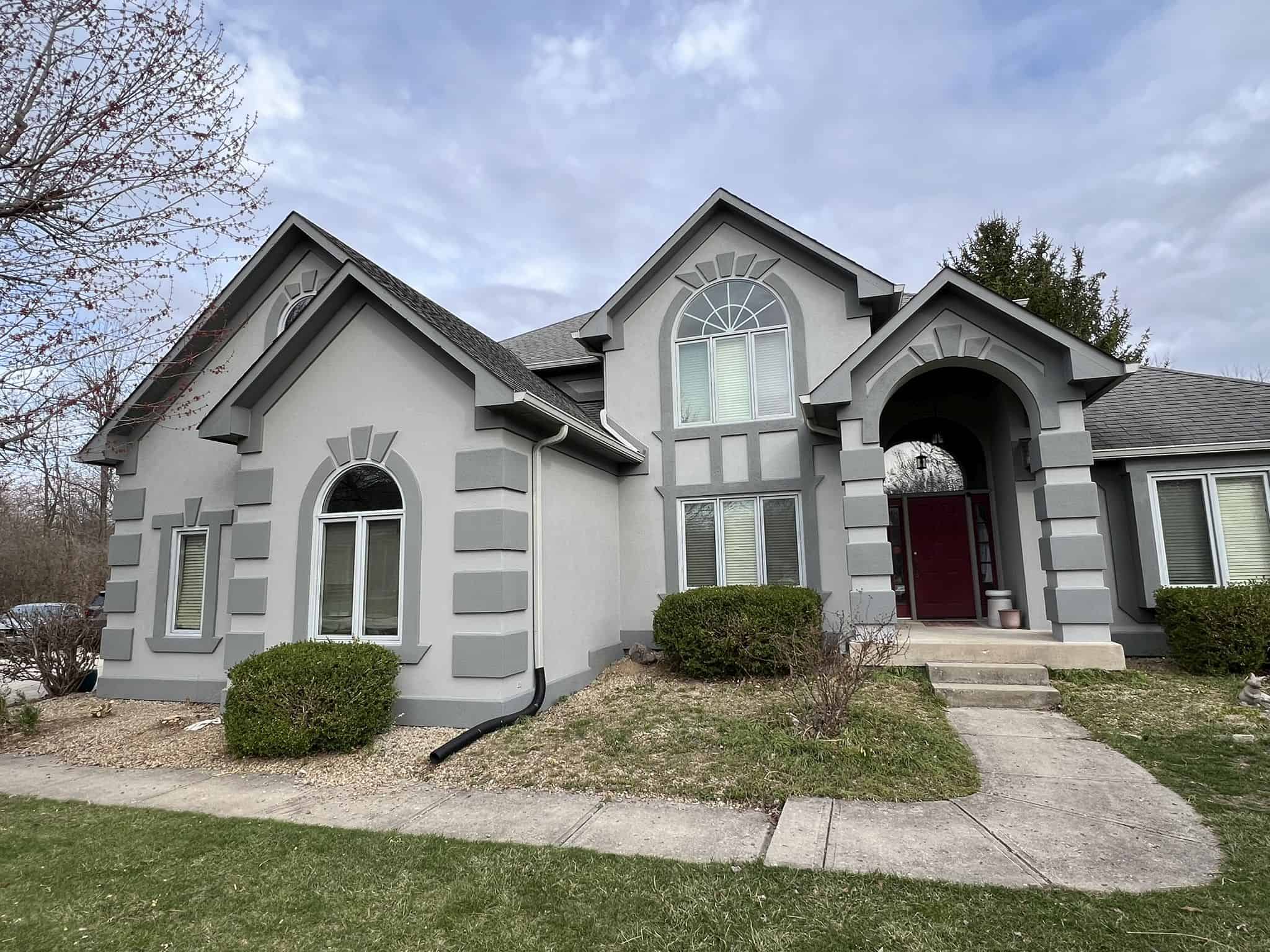
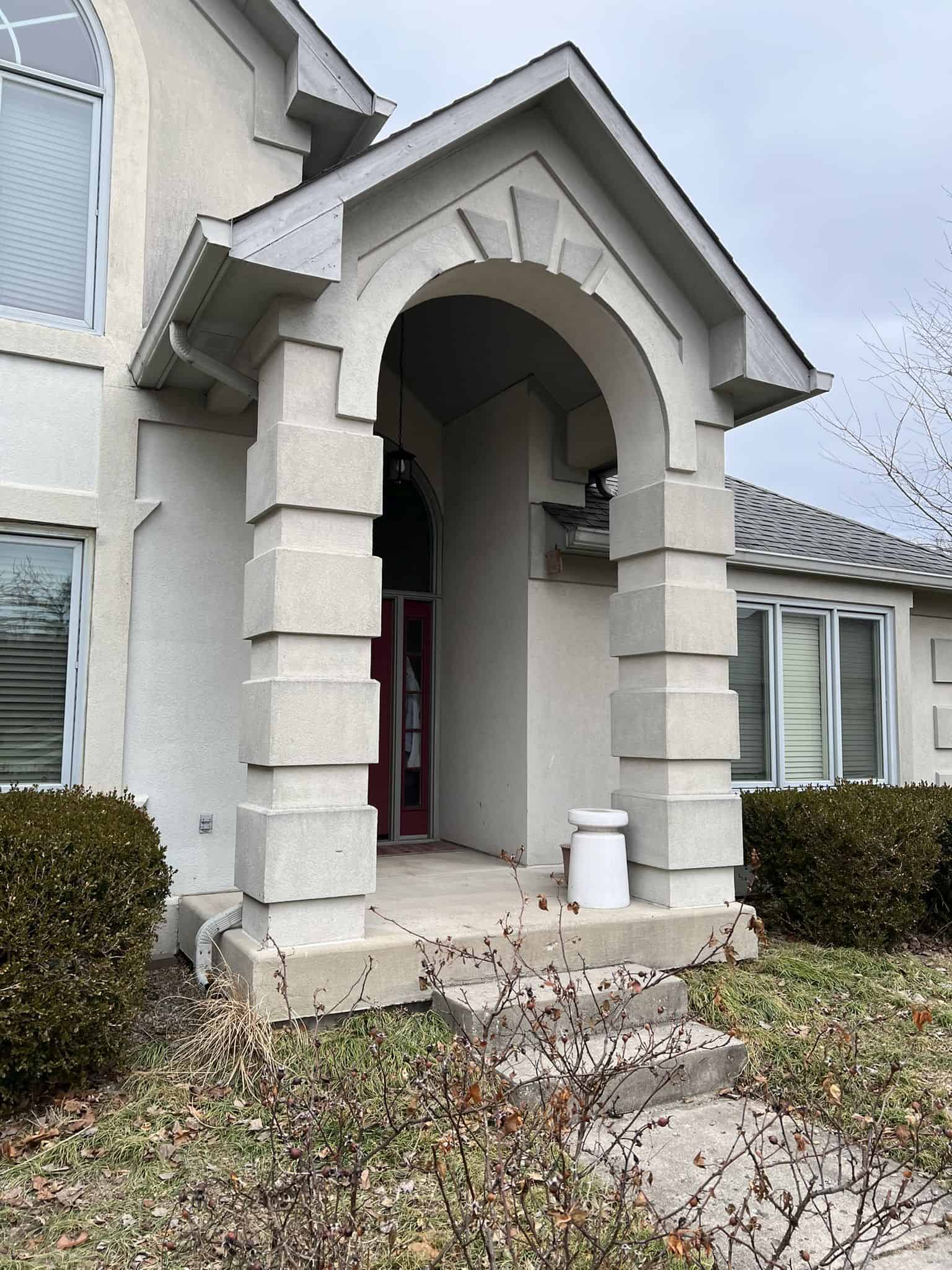
Common EIFS Trouble Spots
Windows and Doors
Window and door openings interrupt the wall system and require careful detailing. Cracks at corners, failed sealant, staining below an opening, or gaps at the perimeter can point to movement or water entry. The surrounding transition should be checked before a cosmetic repair is made.
Roof-to-Wall Connections
EIFS near roof edges, kick-out flashing, parapets, and drainage paths can be affected when water is directed onto or behind the wall. The wall repair and the roof or flashing correction may involve different work, but the sequence matters.
Brick and EIFS Transitions
Greenwood buildings often combine EIFS with brick or other exterior materials. Each material moves and manages water differently. Open joints, deteriorated sealant, missing head flashing, or staining at the transition should be evaluated as part of the wall assembly.
Penetrations and Mounted Items
Lights, signs, vents, pipes, downspouts, railings, and other mounted items create interruptions in the exterior. Fasteners and perimeter seals need to keep water from reaching vulnerable material behind the finish.
Lower Terminations and Impact Areas
The bottom edge of an EIFS wall can be exposed to splashback, landscaping contact, maintenance equipment, and impact. Damage near a termination should be reviewed for exposed foam, mesh, base coat, and substrate conditions.
Sealant Joints are Part of the Wall System
Sealant is expected to accommodate movement and close joints around openings, transitions, and penetrations. Age, movement, poor adhesion, an incorrect joint shape, or incompatible materials can cause it to split or pull away.
Applying new sealant over a failed joint does not correct weak adhesion or damaged material beneath it. The joint should be prepared so the replacement sealant can bond at the intended surfaces and move as designed.
See Indiana Wall Systems’ exterior caulking and sealant services for more information.
How Indiana Wall Systems Approaches a Greenwood Repair
Review the Visible Condition
We begin with the cracks, staining, soft areas, failed joints, impact damage, or previous patches that prompted the call.
Check Nearby Details
The surrounding windows, doors, flashing, penetrations, roof connections, terminations, and material transitions can provide important context.
Define the Affected Area
The visible mark does not always show the full repair boundary. The scope should extend to stable surrounding material and account for damaged components beneath the finish where needed.
Set the Repair Sequence
Moisture-entry points and failed details should be addressed before finish work closes the area. Base coat, reinforcement mesh, compatible finish, sealant, and coatings are then included as the field condition requires.
Discuss Finish Expectations
Age, weathering, texture, color, previous coatings, and lighting affect how a patch reads beside the existing wall. Repair expectations should account for the actual surface rather than promise an invisible match under every condition.
Central Indiana Weather and Exterior Wall Maintenance
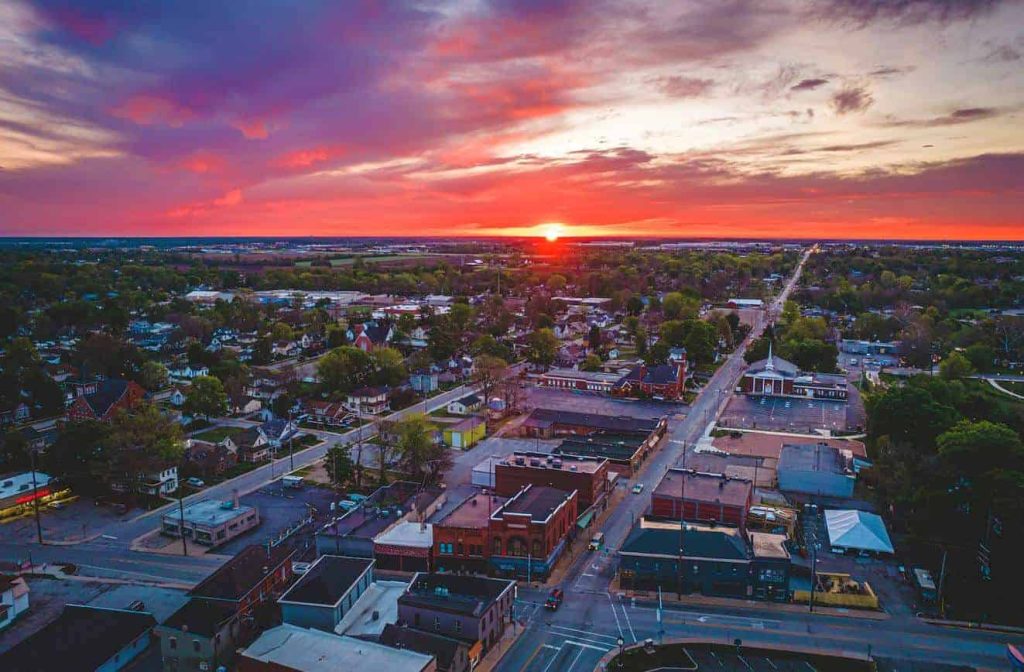
Greenwood walls are exposed to rain, summer humidity, winter temperatures, and repeated freeze-thaw cycles. Weather does not create every EIFS problem, but it can make open joints, cracks, and poorly detailed transitions more consequential.
Exterior maintenance should pay close attention to sealant joints, roof and wall connections, penetrations, lower terminations, and areas where water repeatedly runs or splashes. Finding a small opening before surrounding material is damaged can keep the repair more focused.
Greenwood EIFS Repair FAQs
Can Cracked EIFS Be Patched?
Some cracks can be repaired locally when the surrounding wall remains sound and the cause has been addressed. Recurring cracks, soft areas, open joints, or moisture staining can require a broader evaluation.
What Does a Soft Area in EIFS Mean?
A soft area can involve damaged finish, foam, base coat, reinforcement, substrate, or moisture-related deterioration. Its extent and the surrounding wall details should be checked before a repair scope is set.
Should Failed EIFS Sealant Be Covered with Another Bead?
Usually, the failed joint needs to be evaluated and prepared first. New sealant needs suitable bonding surfaces, the correct joint shape, and compatible materials.
Can an EIFS Patch Match the Existing Finish?
Texture and color can be matched closely, but weathering, coating history, lighting, and the age of the existing finish affect the final appearance. The expected blend should be discussed before work begins.
Does a Water Stain Prove that EIFS is Leaking?
No. A stain identifies an area that needs investigation, but the source may involve a window, roof, flashing, sealant joint, penetration, condensation, or another building condition.
Does Indiana Wall Systems Work on Commercial EIFS in Greenwood?
Indiana Wall Systems works on residential and commercial exterior wall systems. The page’s Greenwood church project photographs document local commercial-scale EIFS restoration work.
Request an EIFS Repair Evaluation in Greenwood
If your Greenwood property has cracked EIFS, failed sealant, staining, impact damage, soft areas, or a previous repair that is opening again, start with the wall condition and the details around it.
Jeff Johnson has worked in EIFS since 1989. Indiana Wall Systems has contracted EIFS, stucco, and plaster work since 2000.
Call 765-341-6020 or contact Indiana Wall Systems to discuss EIFS or stucco repair in Greenwood, Indiana.